
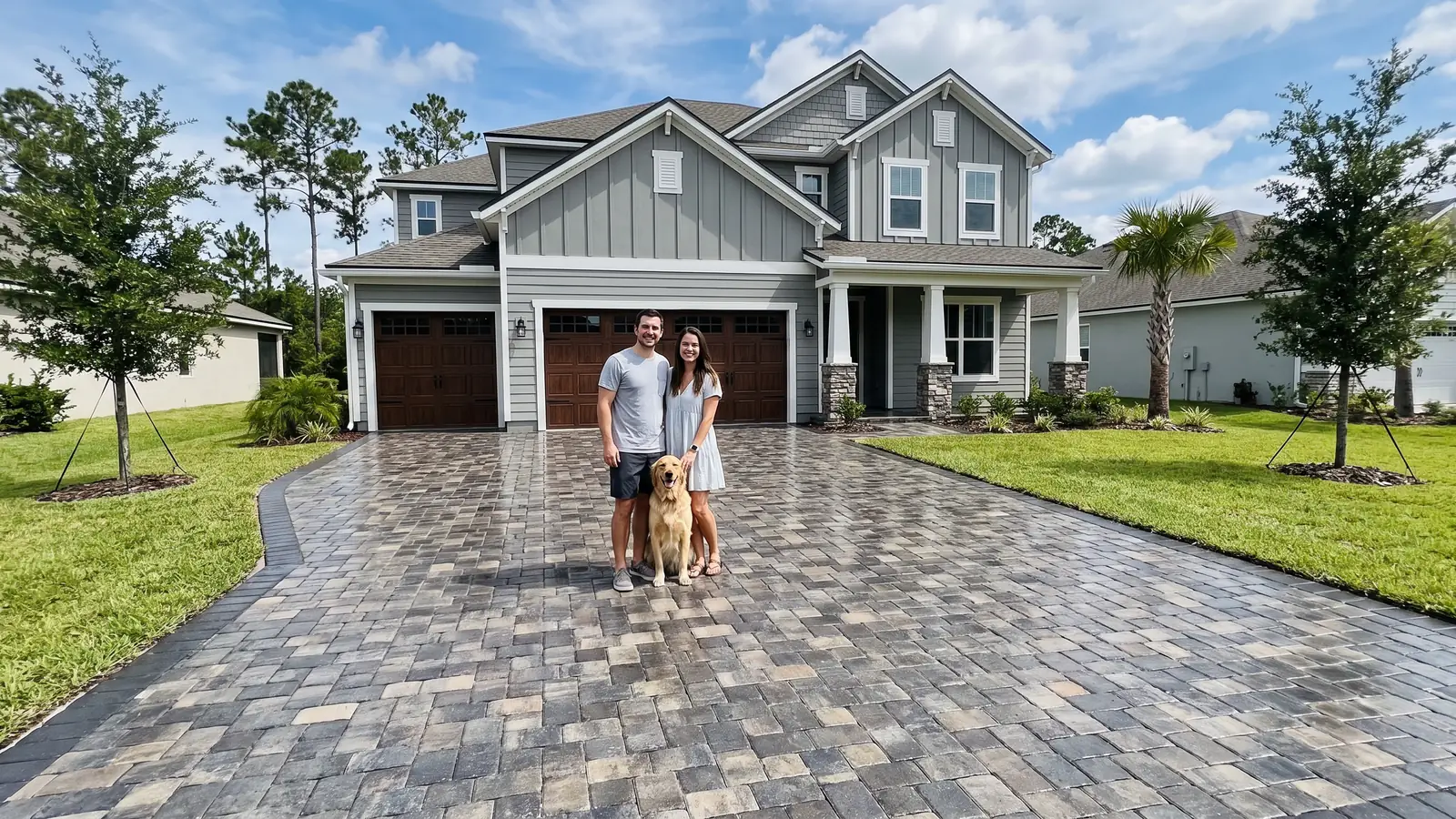
Bolder color, sand-tight joints and simpler upkeep
Paver Sealing in St. Johns, FL
Free paver sealing quotes in Saint Johns are one call away at (904) 552-3813.
- Brings out deeper paver color
- Fresh joint sand helps lock pavers in place
- Gives weeds less room to grow
- Makes the surface easier to keep clean
- Free estimate, no obligation
Request a Free Estimate
Free, no obligations.
Can someone seal my pavers in St. Johns, and how soon?
A local contractor can seal pavers in St. Johns, FL, and you will get a reply within 1 business day, usually much sooner. The estimate is free, and you are under no pressure to book. To start, call (904) 552-3813.
Sealing deepens paver color, keeps joint sand in place and slows the stains that soak in from oil, rust and mildew. Think of the driveway your guests walk up, gray and sandy at the seams, turned rich and even again with every joint packed. Driveways deal with tires, and pool decks deal with water and bare feet, so each area gets a plan of its own. Describe how yours gets used when you request your free quote.
Paver Sealing St Johns Is Proud to Serve Northeast Florida
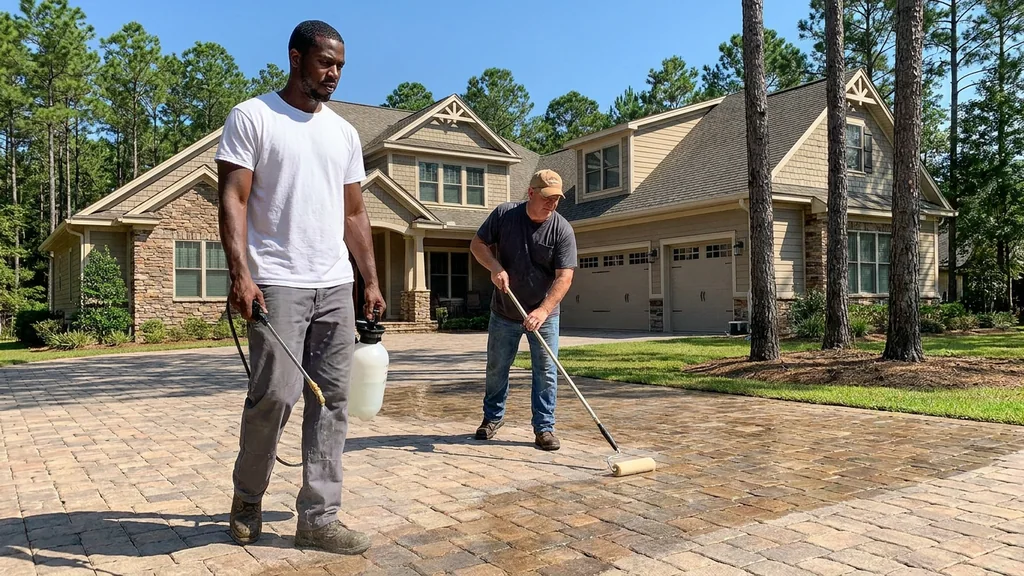
What does a sealing job in St. Johns include?
Expect four stages: an inspection, a deep clean, fresh joint sand and the sealer coat. To go through them for your property, call (904) 552-3813.
The walk-through
Dips, broken pavers, old sealer and drainage are noted before a price is given.
The deep clean
Dirt, algae, rust, tannin and haze come off with cleaners made for concrete pavers.
Fresh joint sand
Sand is swept into the joints and settled so the pavers stay locked.
The sealer
The coat goes on fully dry pavers at the rate on the product's data sheet.
How do I know it is time to reseal?
Signs include dull, chalky color, joints sitting low and water that darkens the pavers instead of beading. A Jacksonville paver company calls sand washing out after storms the problem to catch early, since low joints stop holding the pavers firmly. For a quick opinion on yours, call (904) 552-3813.
Which sealer suits pavers in a humid county?
There is no single right product, so ask the contractor what they plan to use and why. A St. Johns County washing company offers both water-based and solvent-based sealers, and a Jacksonville paver company uses a two-part water-based urethane as its standard. To compare the options for your pavers, call (904) 552-3813.
Unilock leans toward water-based products where they work, since they are low odor and clean up easily. It calls solvent-based sealers somewhat tougher, but they need completely dry pavers and joints. On a humid morning that dryness is harder to reach, so ask how moisture gets checked when you request your free quote.
Glossy or natural: which finish should I choose?
Pick a glossy wet look for bold, deep color and a natural matte finish to keep the pavers looking close to new. A St. Augustine company serving St. Johns County notes that custom glossy or matte finishes cost more than standard sealers. Unilock adds that high gloss can turn slick when wet, so traction matters around a pool. To compare samples, request your free quote.
How long does a seal last in St. Johns?
Most coats last three to five years, according to Unilock. A St. Johns County washing company recommends resealing every two to three years to keep protection strong, and a paver company that works in ZIP 32259 also suggests a yearly cleaning between coats. To have your current coat checked, call (904) 552-3813.
Can sealer fix pavers that have sunk or shifted?
No, sealer only coats what is there. A Jacksonville paver company explains that a low spot or a section that rocks under a car means the base has washed out or settled, and that calls for a repair first. The same company says sealing after the repair helps the fresh joint sand stay put through storms. Ask whether leveling is in the price when you request your free quote.
When should new or older pavers be sealed?
Wait out the white haze on new pavers, then pick a dry spell. Unilock says efflorescence usually clears in two to three months, though it can take up to a year. A washing company that works in St. Johns adds that mortar haze from construction has to come off before any coat. Share your install date when you call (904) 552-3813.
For any reseal, Unilock asks for 24 to 48 hours without rain and temperatures between 50 and 90 degrees. Irrigation timers need to stay off while the coat dries. To choose a date that fits the forecast, request your free quote.
Which surfaces at my home can be sealed?
Sealer works on the driveway, the pool deck, the lanai and the front walk. Wear differs on each, so the plan changes from one to the next. To begin with the area you care about most, request your free quote.
Driveways and aprons
Daily parking, oil spots and sprinkler overspray all land on the driveway. Sealing here keeps the surface even and the joints full where tires turn.
Pool decks
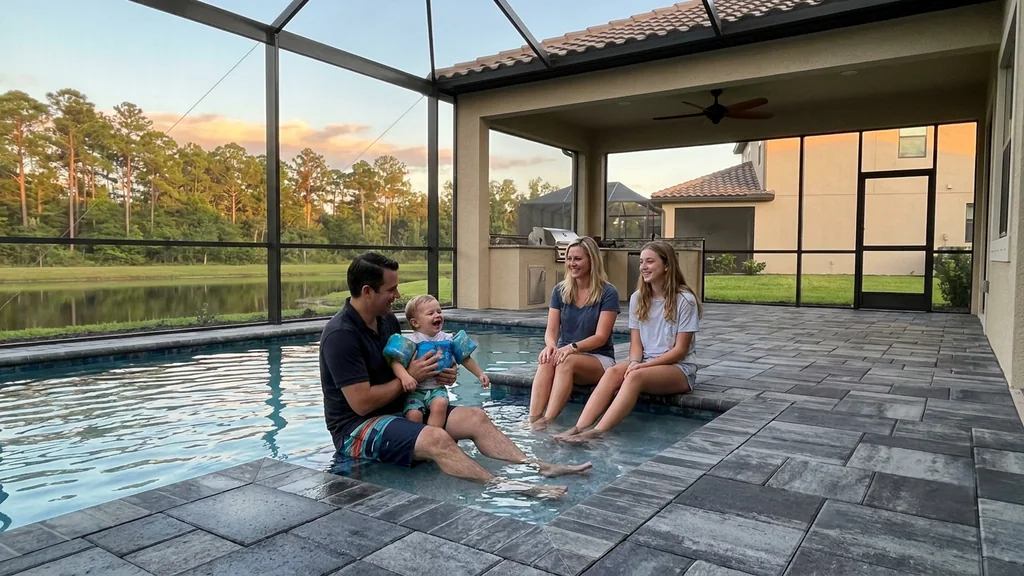
Splash, chlorine and bare feet put pool pavers through a lot, and summer storms pull sand from the joints. Sealing by the water should leave the deck safe to walk on.
Lanais and patios
Covered seating areas stay shaded, so green film and dirt hang on. Sealing on a patio aims at that buildup and the gritty joints around it.
Entry walks
Front walks pick up mulch, soil and dripping planters. Sealing at the entry is a quick change that shows from the street.
What problems do St. Johns pavers run into?
Five issues come up again and again here: construction haze, sand loss on pool decks, irrigation rust, oak tannin and sun fading. Each one is easier to fix early. To learn which you are facing, call (904) 552-3813.
1. Haze left from building
A washing company working in St. Johns says many homes here still carry construction dust, mortar haze on new pavers and irrigation rust. Sealing over that haze makes the next round of trouble worse.
2. Pool decks losing sand
The same company sees pool decks in the newer villages give up their joint sand each summer. The Concrete Masonry and Hardscapes Association says paving hit by regular heavy rain benefits from stabilized joint sand.
3. Rust from new irrigation
Most Florida well water is rich in iron, UF/IFAS Extension reports. Sprinklers aimed at garage aprons and walks leave orange marks that a rust remover has to lift before sealing.
4. Tannin under older oaks
In the northern part of St. Johns, live oaks still shade many drives, and that washing company notes those drives turn brown with tannin. Those stains need their own treatment.
5. Fading in open sun
A Jacksonville paver company says full sun, sandy ground and hard summer rain wear down pavers in ZIP 32259 over a few years. Unsealed color goes chalky first on open drives.
How much does paver sealing cost in St. Johns?
Count on $1.50 to $3.00 per square foot in St. Johns for the wash and seal together. That is the package price a St. Augustine company serving St. Johns County publishes. Stripping a failed coat costs more, and a Jacksonville company's 2026 price guide puts that add-on at $0.75 to $1.50 per square foot. To get an exact figure for your home, request your free quote.
Only want a cleaning? Read about paver cleaning and joint sand, look over the communities covered or return to St. Johns paver sealing.
| Paved area | Typical example | Clean, sand and seal |
|---|---|---|
| 300 sq ft | Small patio or walkway | $450 to $900 |
| 600 sq ft | Two car driveway | $900 to $1,800 |
| 1,000 sq ft | Large driveway or pool deck | $1,500 to $3,000 |
| 1,500 sq ft | Driveway plus pool deck | $2,250 to $4,500 |
Math based on the $1.50 to $3.00 per square foot that Northeast Florida paver companies published as of November 2026. Your contractor sets the actual price after seeing the surface. Repairs, leveling and stripping failed sealer are usually extra.
Why work with a contractor who covers St. Johns?
A contractor working this county is used to new-build haze, rusty sprinkler marks and sandy pool decks. You still get a written price and time to think. To begin, call (904) 552-3813.
Contractors who work the county
A company that covers St. Johns knows the newer subdivisions, the older oak streets and the association rules that come with both. That saves time on the first visit.
Nothing owed for the estimate
The look and the price are free. Turn the quote down and nothing more happens.
Prices you can check
St. Johns County companies publish their square foot rates, and you will find them on this site. A quote far outside them is worth a question.
Decide on your own clock
Ask for the number in writing and take the time you need. Our contractor standards list what to confirm before you sign.
Ready for your free sealing estimate?
Phone or use the short form, and expect an answer within 1 business day, usually much sooner.
Free, no obligations
What is the sealing process from first visit to final coat?
The job runs in five steps, from the first walk-through to the last look. To book a time, call (904) 552-3813.
1. Look before pricing
The contractor walks the area before quoting the sealing job, noting dips, broken pavers, old sealer and any spot where water pools.
2. Prep and wash
Plants and screens get protected and the irrigation goes off. The pavers are washed with a surface cleaner or a wide fan tip held low so the joints keep their sand.
3. Work on stains
Rust, tannin, mortar haze and efflorescence each get a cleaner suited to them, tried on a small area first.
4. Sand the joints
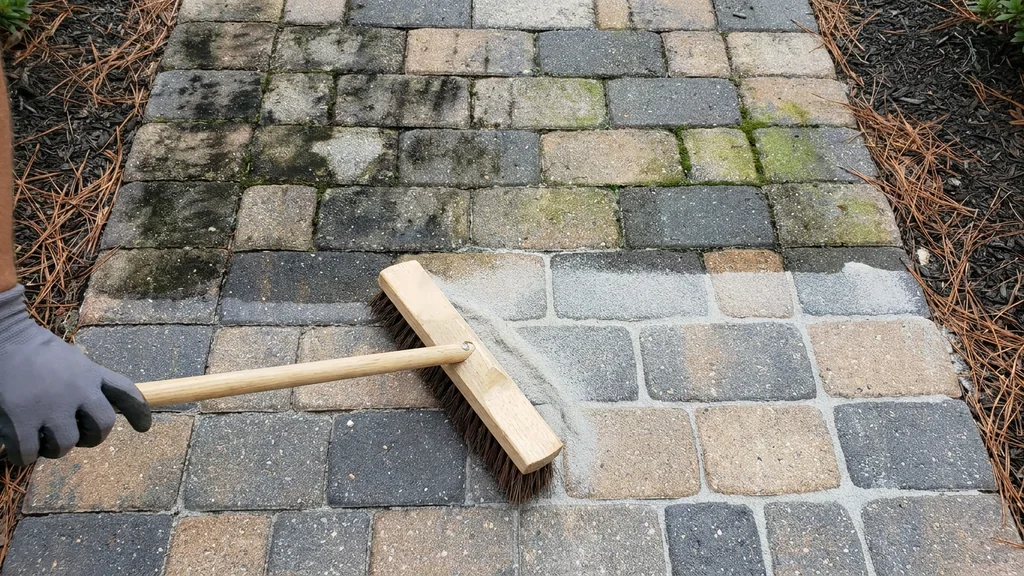
When the pavers are dry, joint sand gets swept in and settled with a plate compactor, and a blower clears what is left.
5. Coat and review
If you chose sealer, it goes on with a low pressure sprayer and a roller. The contractor then walks the job with you and explains how long to stay off it.
Frequently Asked Questions
How much does it cost to seal pavers in Florida?
In St. Johns County, plan on $1.50 to $3.00 per square foot for a wash and seal package, the range a St. Augustine company serving the county publishes. An 800 square foot St. Johns driveway comes to about $1,200 to $2,400 at that rate. Repairs and stripping old sealer cost extra.
How often should you reseal pavers in Florida?
Unilock's general guide is every three to five years. A St. Johns County washing company recommends every two to three years for steady protection. Full sun, sprinklers and car traffic push a coat toward the short end.
Can I pressure wash my paver patio?
A paver patio can be pressure washed before sealing, as long as the pressure stays moderate. Western Interlock, a paver company, suggests about 1,500 PSI, and the joints will need fresh sand afterward. The pavers also have to dry fully before any sealer goes on.
What do professionals use to seal pavers?
Most use a water-based or solvent-based sealer made for pavers. A St. Johns County washing company offers both types, and a Jacksonville paver company that works in ZIP 32259 uses a two-part water-based urethane. Ask for the product name and data sheet before work begins.
Is it better to spray or roll paver sealer?
Neither is wrong, and plenty of contractors use both on one job. Unilock names a sprayer or a foam or short pile roller as ways to put sealer down. Ask which method the contractor prefers for your pavers and why.
How long before a sealed driveway in St. Johns can take a car?
Give it up to two days. A paver company working in ZIP 32259 says its sealer needs 24 to 48 hours to cure, depending on the weather, and Unilock wants that same window kept dry. Irrigation stays off until then.
Do new pavers in St. Johns subdivisions need to wait before sealing?
Yes. Unilock says efflorescence, the white film on new concrete pavers, usually takes two to three months to fade. A washing company that works in St. Johns also points to mortar haze on pavers at newly built homes, which has to be cleaned off before a coat goes on.