
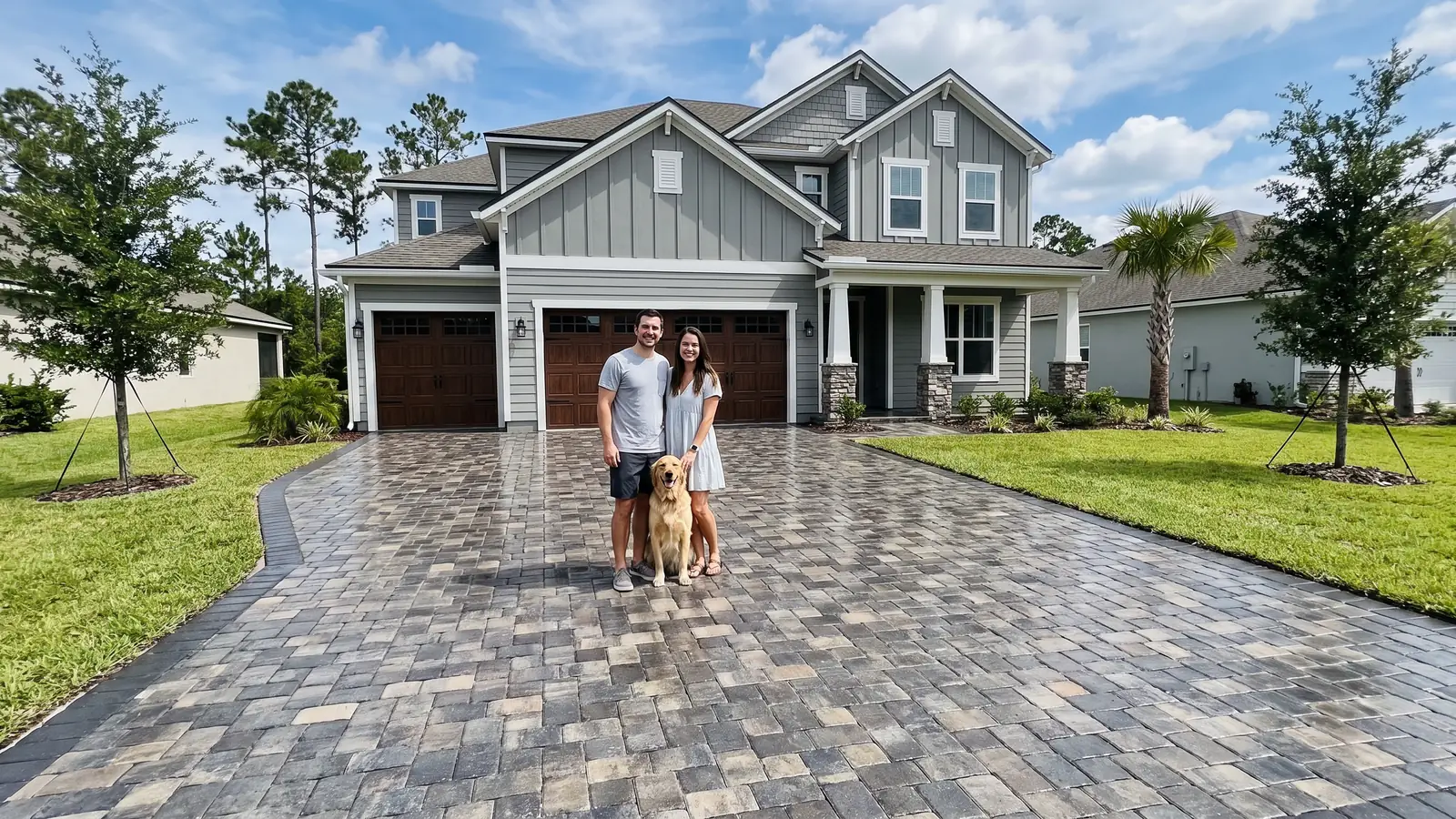
Paver sealing for Jacksonville Beach homes
Paver Sealing in Jacksonville Beach, FL
Pavers fading in Jacksonville Beach? Get local help from Paver Sealing St Johns. Call (904) 552-3813
- Brings out deeper paver color
- Fresh joint sand helps lock pavers in place
- Gives weeds less room to grow
- Makes the surface easier to keep clean
- Free estimate, no obligation
Request a Free Estimate
Free, no obligations.
Fast, careful paver sealing help in Jacksonville Beach
Paver sealing in Jacksonville Beach is available for driveways, pool decks and courtyards from the oceanfront blocks to the neighborhoods west of Third Street. A local contractor sizes up the job and prices it for free, with no obligation to book. Salt wear, loose joints and repairs can all be looked at in one trip. Use request your free quote, and you will hear back within 1 business day, usually much sooner.
Salt and sun can turn a once bright driveway pale and chalky in a few seasons, with sand slipping from the joints after every storm. A deep clean, new sand and a fresh coat bring the color back and tighten things up again. It is a big change for a small yard. To describe your pavers before a visit, call (904) 552-3813.
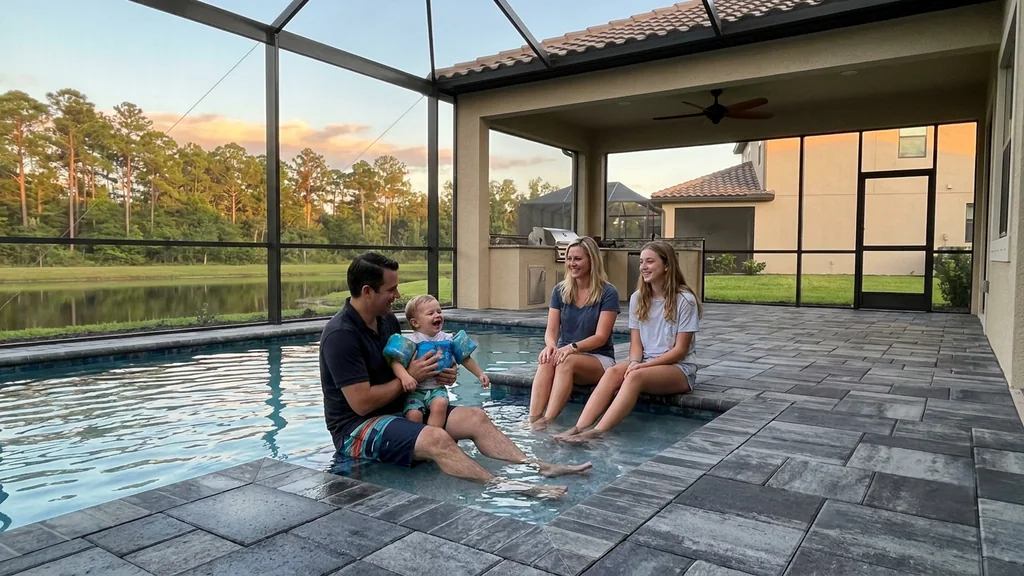
Why Jacksonville Beach chooses Paver Sealing St Johns
Living a few blocks from the Atlantic changes how pavers age, so beach homeowners often pick a contractor who already works near the ocean. To reach someone who knows Jacksonville Beach and its salt air, request your free quote.
A free look at your pavers
The contractor comes to your Jacksonville Beach home, checks salt wear, sand and stains, and prices the job at no charge.
A clear price range
Northeast Florida companies commonly publish $1.50 to $3.00 per square foot to clean, sand and seal, so bids are easy to compare.
Grip and shine options
Pool decks get an anti-slip additive. A wet look adds shine but shows scuffs sooner than a matte coat.
Nothing booked until you agree
You choose the finish, the date and whether to go ahead after the Jacksonville Beach estimate, with no pressure either way.
Get Your Free Estimate in Jacksonville Beach
Tell us about your pavers in Jacksonville Beach.
Free, no obligations
What paver problems show up most in Jacksonville Beach?
Salt that leaves pavers chalky
University of Florida advice calls for salt tolerant plants within about an eighth of a mile of the ocean, which shows how far spray travels. A paver company working the beaches says that salt settles on unsealed pavers and soaks into the pores. Over time, sun and salt together leave the surface pale, rough and chalky. Oceanfront and near-ocean homes usually see it first, often on the side that faces the wind.
Street flooding after a downpour
In December 2016, a record day of rain put part of First Avenue South underwater for hours. Sidewalks and driveways near 12th Avenue South flooded too, and crews had to dig out the beach drain outlets. Water that sits on pavers leaves sand, grit and a dull film behind. A careful wash has to clear all of it before any coat goes on, or the grit ends up sealed in place.
Joint sand on the move
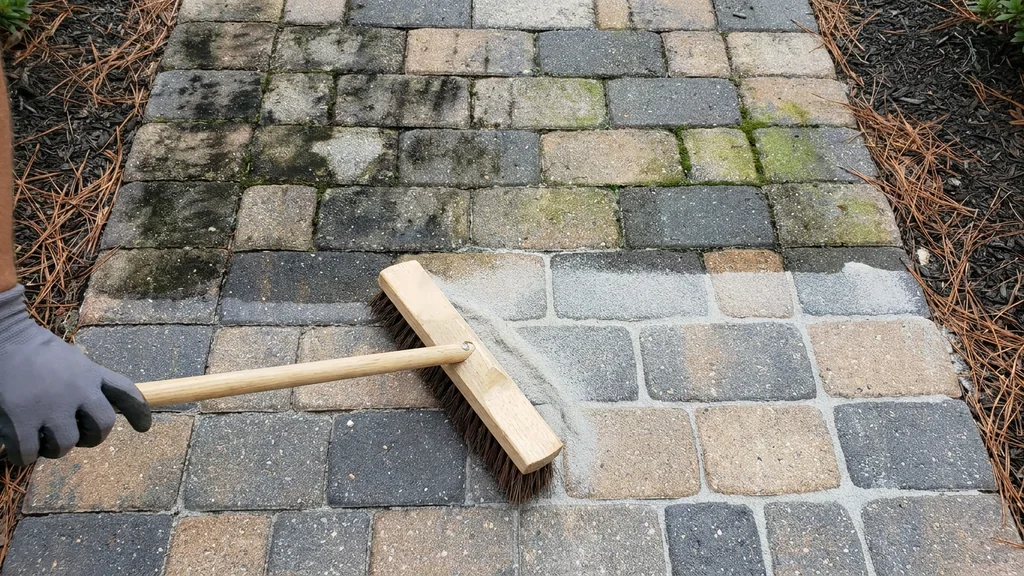
The beaches paver company puts it simply: sandy ground plus heavy summer rain plus any slope moves joint sand. Jacksonville Beach averages more than 52 inches of precipitation a year, so that happens often. Car tires add to it, since turning wheels loosen sand and let pavers creep toward the edges. Open joints soon fill with weeds and wind-blown beach sand instead of the right joint sand.
Air that never quite dries
The same beaches company says the humidity here does not let anything dry out completely. A Jacksonville paver company adds that sealing damp pavers can leave a cloudy or white finish. On a still, muggy morning near the ocean, pavers can feel dry on top but hold water in the joints. That is why drying time gets checked closely, by hand and by eye, before sealing starts.
Green growth in shaded side yards
Narrow side yards and north-facing walks get little sun, and the beaches company says spots like that grow algae and mildew. Sprinklers on watering days keep them damp longer, especially when the spray hits the walk. The green film makes pavers slick and shows through a clear coat if it is not removed. It needs a proper cleaning before the sealing step, along with a look at where the sprinklers aim.
Does it matter how close to the ocean my Jacksonville Beach home sits?
Yes, distance from the water changes how fast pavers wear. Homes east of Third Street and in pockets like South Pablo Beach sit within easy reach of salt spray, often on a tight beach-town grid. Nearby Sea Grove has 174 homes built in the 1920s, some of the oldest in the area. If you live on the ocean blocks, say so when you request your free quote, since salt changes the cleaning plan.
West of the beach blocks, Ocean Terrace is an established neighborhood from the early 1980s near South Beach Park. Its streets include Palm Way, Grande Boulevard and America Avenue, and an HOA is in place. Many associations have rules about exterior work, so check yours before choosing a finish, a joint sand color or a wet look. Call (904) 552-3813 once you know what your HOA allows.
Some streets also carry a flood history. In the December 2016 storm, First Avenue South and the area near 12th Avenue South took water. Matthew brought major flooding to the city that October as well, even while passing offshore. Pavers in low spots may need a longer wash and more new sand, so to get a price that reflects your street, request your free quote.
What does paver sealing cost in Jacksonville Beach?
Companies across Northeast Florida commonly publish $1.50 to $3.00 per square foot to clean, sand and seal. A Jacksonville Beach job climbs within that range when salt buildup is heavy, joints are badly washed out or an old coat needs attention. A pool deck and driveway priced together add more square feet, so the total rises along with the measured area. To get a free figure for your home, request your free quote.
Repairs change the number too. Sunken or creeping pavers get reset before sealing, and that adds labor to the quote. Tight beach lots, common on the older grid, can also mean carrying gear through a narrow side yard to reach a pool deck. Call (904) 552-3813 and the contractor can tell you what affects the price at your address.
| Paved area | Typical example | Clean, sand and seal |
|---|---|---|
| 300 sq ft | Small patio or walkway | $450 to $900 |
| 600 sq ft | Two car driveway | $900 to $1,800 |
| 1,000 sq ft | Large driveway or pool deck | $1,500 to $3,000 |
| 1,500 sq ft | Driveway plus pool deck | $2,250 to $4,500 |
Math based on the $1.50 to $3.00 per square foot that Northeast Florida paver companies published as of November 2026. Your contractor sets the actual price after seeing the surface. Repairs, leveling and stripping failed sealer are usually extra.
How does a paver sealing job work in Jacksonville Beach?
Walk the property and check the old coat
The contractor starts by looking at every paver area, how it drains and where sand has washed out. Sunken or creeping pavers get marked for resetting. If the pavers were sealed before, the old product matters, because it decides what can go on next. Any past street flooding, even from a single hard rain, is worth mentioning here.
Wash away salt, sand and mildew
The cleaning step lifts salt film, blown sand, grit from flooding and any green growth in shady corners. Stains get treated before the main wash. Rinse water is kept away from plants, pool screens, doorways and the cars parked next door. On ocean blocks, this step often takes longer than people expect because salt hides in the joints.
Reset low spots and refill joints
Washing pulls sand out of the joints, so every joint gets refilled. Sunken pavers are lifted, the base is leveled, and they go back in line. The new sand is swept in and settled until every joint sits full from edge to edge. Extra sand is cleared off the surface so it does not end up under the coat.
Let the beach air do its work
Sealer needs a surface that is dry through the joints, and humid beach air slows that down. After rain or a watering day, the contractor waits and checks by hand. Shaded courtyards and narrow side yards always dry last. If a storm looks likely, the job moves to another day.
Spray, back-roll and cure
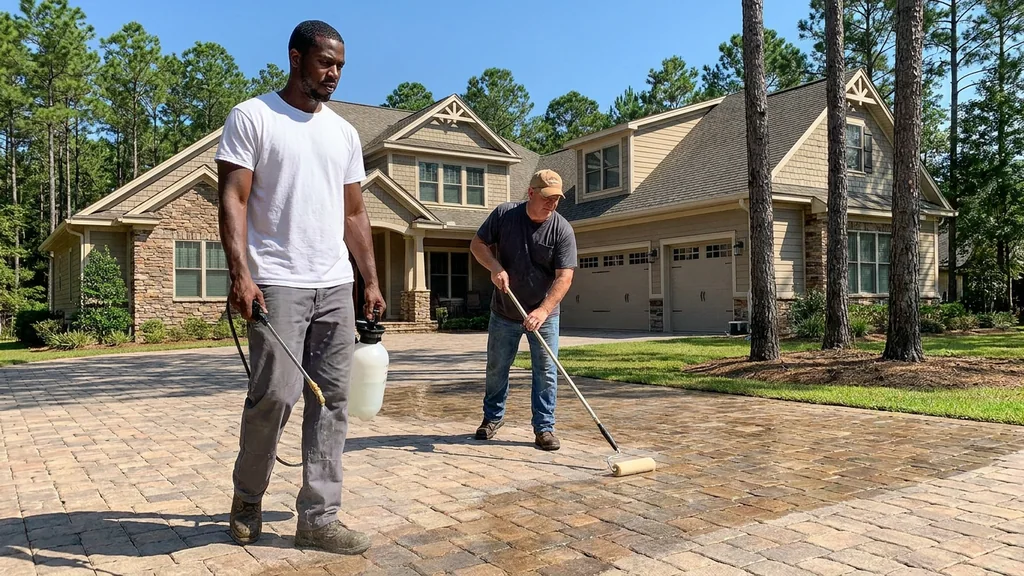
Pros usually spray the sealer and then back-roll it, which avoids lap marks and puddles on textured pavers. Pool decks get grip mixed into the coat before it goes down. You can usually walk on it within a few hours, and cars should wait about a day. Later, water that beads on top tells you the coat is still doing its job.
Complete paver services in Jacksonville Beach
A Jacksonville Beach job follows a simple order: wash, repair and re-sand, dry, then seal. The wash removes salt, grit, mildew and stains, and any sunken pavers get reset while the joints are open. Fresh sand goes in, the surface dries all the way, and then the coat goes down. To hear how long that takes at your home, call (904) 552-3813.
Each surface at the beach wears differently. Driveways take tires, sand and salt, pool decks need grip for wet feet, and courtyards may stay shady and damp. Walkways near the dunes collect blown sand in the joints, and entries by the garage take the most foot traffic. Tell the contractor which areas you want done when you request your free quote, and mention any spots that stay wet.
Sealer choice begins with what is on the pavers now, since water-based sealer will not bond over a solvent-based coat. Then comes the finish, from a quiet matte to a full wet look that deepens color but shows scuffs sooner. A pool deck also needs an anti-slip additive mixed in so the surface stays safe when it is wet. Call (904) 552-3813 to talk through what fits your Jacksonville Beach home.
Weather sets the schedule at the beach. Summer storms roll in fast, and the damp air slows drying even on clear, breezy days. A contractor may push your date back a day rather than seal pavers that still hold water. For a time that fits the forecast and your watering day, request your free quote.
Questions to ask before you hire
- Can I get a copy of your liability coverage and any license required for this work?
- Can you show me what a wet look and a matte finish look like?
- How do I get hold of you if something looks off after the job?
- About how long before my pavers need sealing again?
- How do you handle a rainy forecast on my scheduled day?
- Should I turn off my irrigation, and when can it come back on?
- What is your payment schedule, and is a deposit required?
Why local matters in Jacksonville Beach
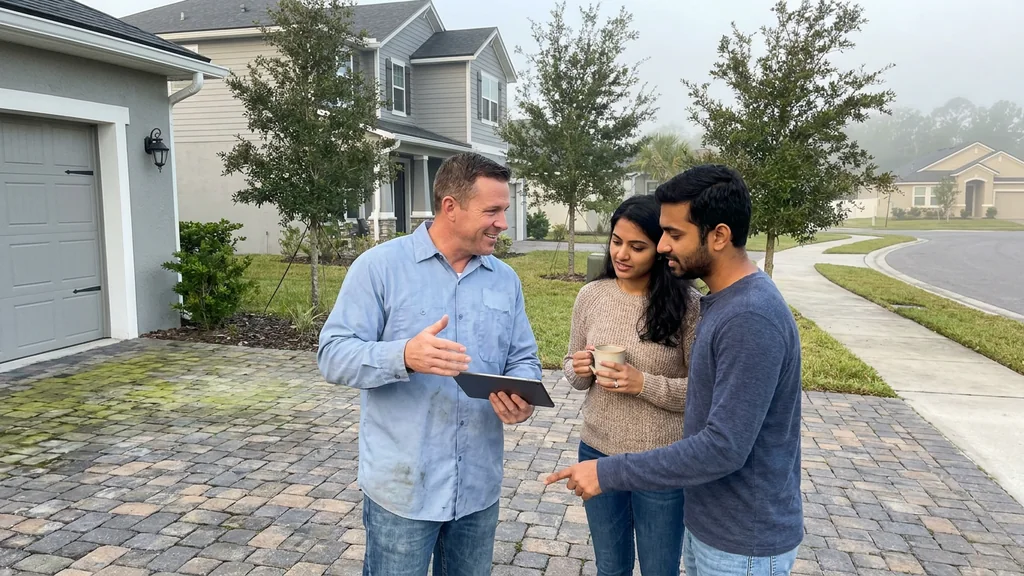
A contractor who works at the beach knows salt and humidity shape every step. That means a longer wash on ocean blocks, more patience on drying day and a finish chosen for sun and sand. Someone from far inland may plan the job like any other driveway. For someone who already works these beach streets, call (904) 552-3813.
Local knowledge also helps with flooding. Streets like First Avenue South have taken water in hard rain, and storms like Matthew brought major flooding to the city. A contractor familiar with those spots asks the right questions before quoting and checks the low corners of the lot. You can request your free quote and ask how high water at your house would change the plan.
Beach lots are often tight, with pavers running from the street to a pool or courtyard out back. Getting gear in, protecting screens and working around neighbors takes some care. A contractor used to these streets plans for it from the start, including where the truck can park. To set up a free visit with no obligation, request your free quote.
Which Jacksonville Beach landmarks should I mention when asking for a quote?
Name the one closest to you, and the contractor will know your part of the island right away. The Jacksonville Beach Pier is the classic marker, rebuilt after Hurricane Floyd wrecked it in 1999 and damaged again by Matthew in 2016. Beach Boulevard ends just three blocks from the ocean, and A1A runs as the main commercial strip. If you live near the pier or the end of Beach Boulevard, call (904) 552-3813 and give your cross street.
The city has its own history, too, from Ruby in 1884 to Pablo Beach in 1886 and the name Jacksonville Beach in 1925. The Mission-style Casa Marina Hotel dates to 1925, and the 1947 Red Cross lifesaving station still stands near the sand. On the south side, South Beach Park anchors the Ocean Terrace area off Butler Boulevard. Wherever you live in Jacksonville Beach, request your free quote and mention the nearest landmark.
Frequently Asked Questions
What is the average cost to seal pavers in Jacksonville Beach?
Expect roughly $1.50 to $3.00 per square foot for the full clean, sand and seal, which is what Northeast Florida companies commonly publish. Heavy salt buildup, washed-out joints and repairs push a beach job toward the high end. A quote that lists the square footage makes it easy to check. Pool decks and walkways get added to the driveway total.
Is there a downside to sealing pavers in Jacksonville Beach?
The main downsides are upkeep and timing. A coat wears down and needs renewing, and a wet look shows scuffs sooner than matte. Humid beach air and summer storms can also push your date back, since sealer needs a dry surface. Neither is a reason to skip sealing, only something to plan for.
What do professionals use to seal pavers near the ocean?
Professionals use a water-based or solvent-based sealer, and the coat already on the pavers decides which one can follow. Then comes the finish, from matte to wet look. Around a pool, the coat gets a grip additive so the deck is safer underfoot. Ask for the product name so the next coat can match it.
Is it better to spray or roll paver sealer in Jacksonville Beach?
Doing both works better than either alone. A Jacksonville paver company says pros usually spray first and then back-roll. Rolling alone risks lap marks, and spraying alone can put too much on textured pavers. Back-rolling also pushes sealer down into the joints, where beach sand tends to escape.
How often do you have to seal pavers in Jacksonville Beach?
Many companies quote two to five years between coats. Salt, sun, tires and pool water push beach pavers toward the shorter end. A quick test helps: water that beads means the coat still works, and water that soaks in means it is time. Ocean blocks often reach that point before homes farther west.
How much should I pay to seal a pool deck or patio at the beach?
Expect the same per-square-foot range as a driveway, $1.50 to $3.00 for the full clean, sand and seal. A pool deck also needs an anti-slip additive, which is worth confirming in the quote. Measuring all areas together gives you one clear total. Larger areas raise the total even when the rate stays the same.
Does salt air hurt unsealed pavers in Jacksonville Beach?
It wears them down over time. A beaches paver company says salt settles on unsealed pavers, works into the pores and, with the sun, leaves them chalky. A clean surface and a fresh coat help keep that salt on top where rinsing can reach it. Homes on the blocks nearest the ocean usually notice it first.
Can pavers be sealed soon after a street flood?
It can be done, but only after a full cleaning and a complete dry. Floods like the one on First Avenue South in 2016 leave sand and grit in the joints. The contractor washes that out, replaces lost sand and waits for the surface to dry before sealing. Point out the low spots where water stood the longest.
Ready for a Free Estimate in Jacksonville Beach?
Call (904) 552-3813 and tell us about your pavers.
Free, no obligations