
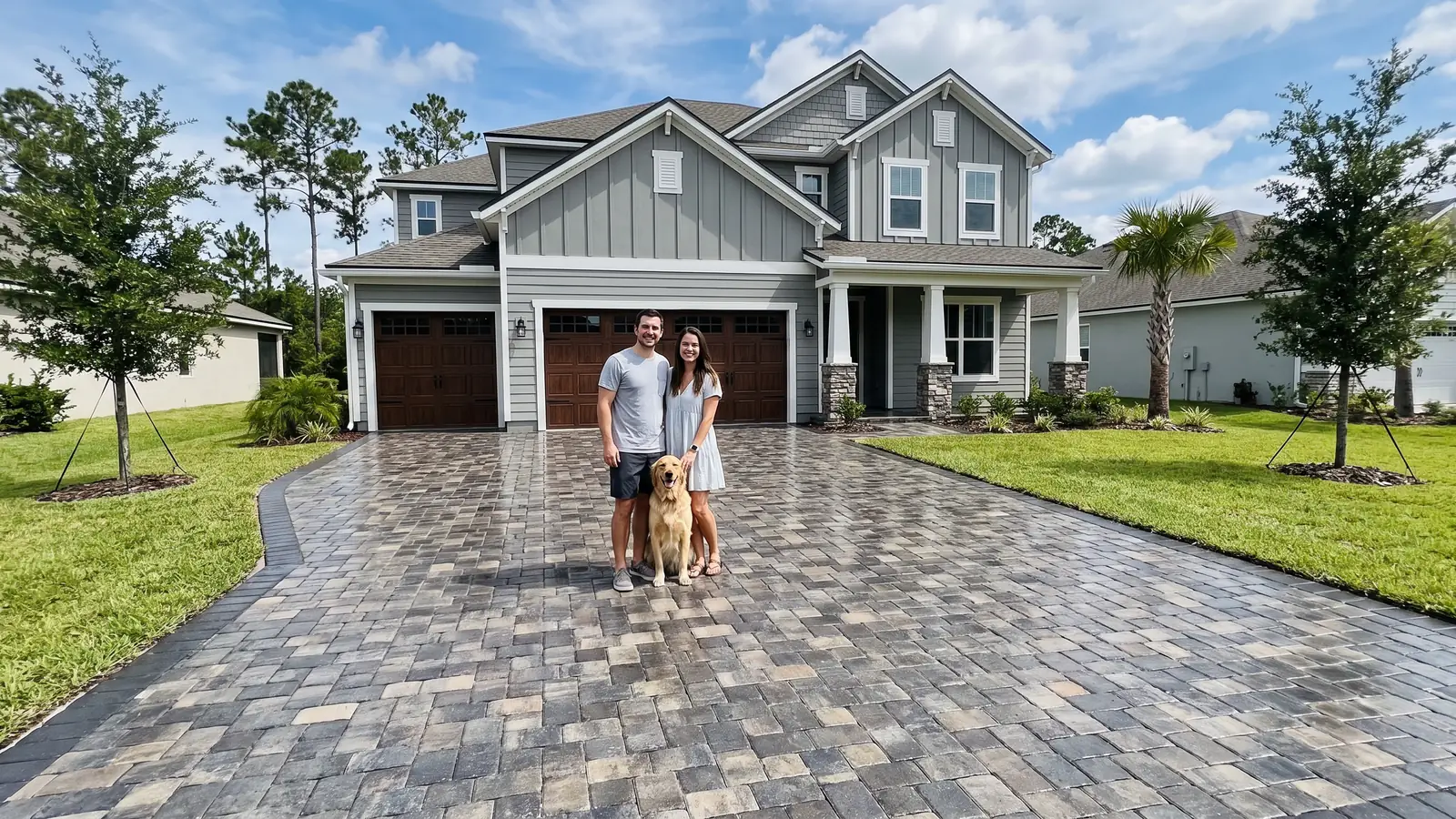
Paver sealing for Jacksonville homes
Paver Sealing in Jacksonville, FL
Pavers fading in Jacksonville? Get local help from Paver Sealing St Johns. Call (904) 552-3813
- Brings out deeper paver color
- Fresh joint sand helps lock pavers in place
- Gives weeds less room to grow
- Makes the surface easier to keep clean
- Free estimate, no obligation
Request a Free Estimate
Free, no obligations.
Fast, careful paver sealing help in Jacksonville
Paver sealing in Jacksonville is available for homeowners in every part of the consolidated city, from Northside and Westside to Arlington and Southside. A local contractor will price your driveway, patio or pool deck for free, and repairs can be quoted in the same visit. The same visit can cover a single walk or every paver surface on the lot. Ask through request your free quote, and a reply arrives within 1 business day, usually much sooner.
Think about a driveway where tire paths have gone dark, joints are thin and a few weeds poke through near the garage. A cleaning, new joint sand and a fresh coat make those pavers look even again from the curb to the front door. It is the kind of change you notice every time you pull in. If you would rather talk first, call (904) 552-3813 and describe what you see.
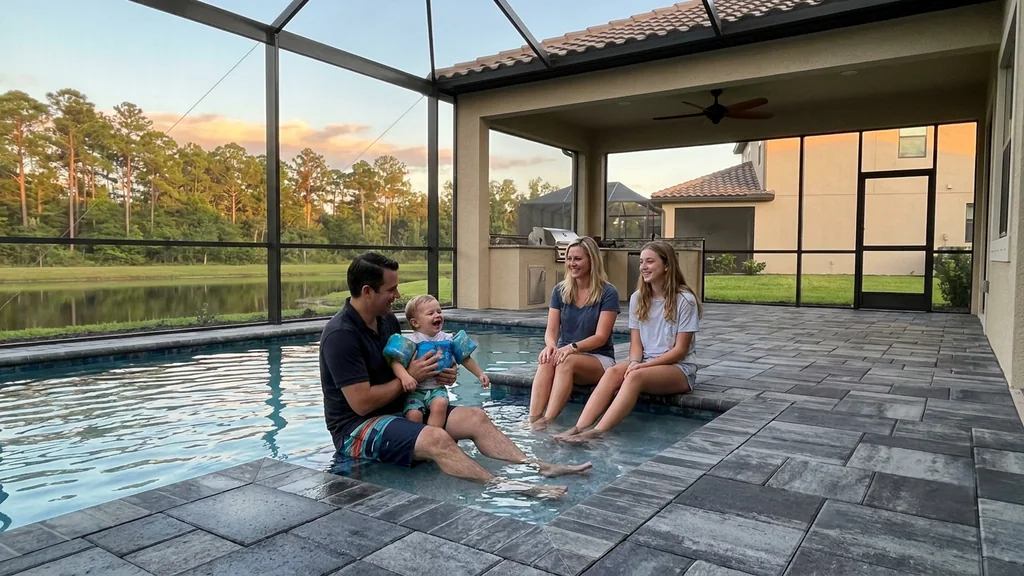
Why Jacksonville chooses Paver Sealing St Johns
Jacksonville spreads over about 874 square miles, so homeowners often want a contractor who knows their part of town and its flood history. To find that kind of help close to your street, request your free quote.
A free price at home
A contractor visits your Jacksonville address, looks at each paver area and quotes the work without charging for the trip.
A published range to compare
Northeast Florida companies commonly publish $1.50 to $3.00 per square foot to clean, sand and seal, a fair yardstick for bids.
Finishes explained plainly
Semi-gloss is a common local pick. Matte soaks in with no shine, and a wet look shows scuffs on busy driveways sooner.
The call stays yours
You set the date, the finish and the scope of work. A Jacksonville estimate carries no obligation to go ahead with the job.
Get Your Free Estimate in Jacksonville
Tell us about your pavers in Jacksonville.
Free, no obligations
What paver problems show up most in Jacksonville?
River flooding on low streets
During Irma in 2017, the St. Johns reached a record 5.57 feet. Homes in San Marco and across the city flooded, and downtown streets turned into rivers. Water like that leaves silt in paver joints and a dull film on top, worst in the low corners. All of it has to be washed out, or the new coat traps it for years.
Sandy ground that lets joints drain
A common Duval County soil, the Ortega series, was first described near St. Johns Bluff Road. It is fine sand more than 80 inches deep, and water moves through it fast. With about 53.4 inches of rain a year, summer storms in Jacksonville flush joint sand down and out of the gaps. Once the joints thin, pavers start to rock, edges drift and weeds move in.
Big oaks and lifted pavers
The Treaty Oak on the Southbank spreads its crown about 145 feet, a reminder of how large Jacksonville oaks can grow. University of Florida extension warns that live oak roots can push up sidewalks, patios and driveways as they thicken. A lifted row of pavers is a trip hazard and a weak spot where sand escapes. It gets reset on a level base before anyone seals over it.
Mildew where sprinklers hit shade
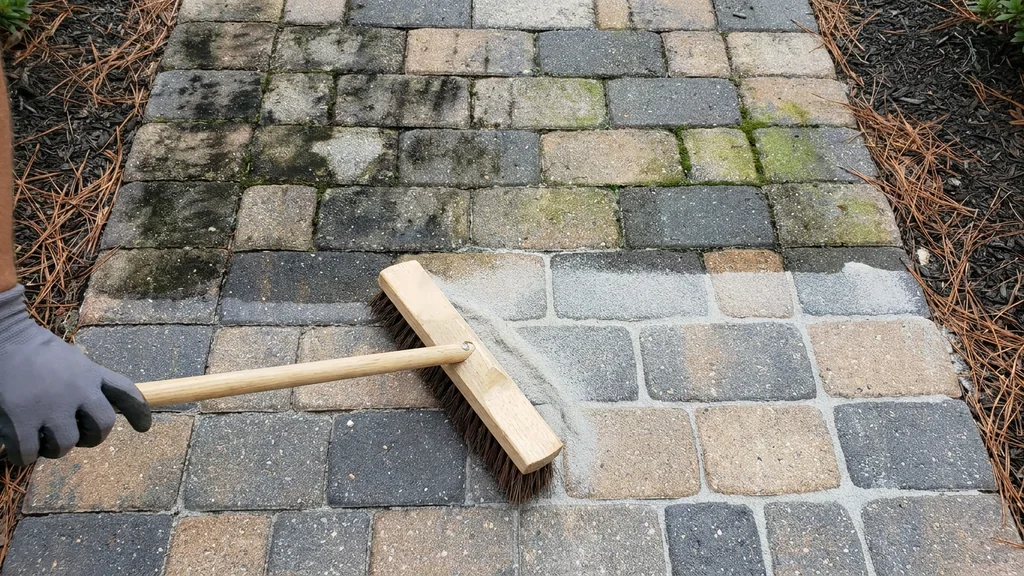
A Jacksonville paver company says spots in shade that also get hit by sprinklers can grow mildew. Watering rules set certain days by address, and each soaking keeps those shady pavers damp well into the next morning. The black or green film shows first along walks, patio edges and the north side of the house. It has to be cleaned off before sealing, or it shows through the clear coat for years.
Tire paths and creeping pavers
Driveways take more abuse than any other paver surface at a Jacksonville home, from daily commutes to delivery trucks. A local paver company says the weight of a car and the twist of turning tires loosen joint sand and let pavers creep. Dark tire paths and wavy edges follow, mostly where cars turn in from the street. Resetting, re-sanding and a coat suited to traffic slow that wear down.
Does paver sealing change from one part of Jacksonville to another?
Yes, because the city is huge and its areas differ a lot. Since the 1968 merger with Duval County, Jacksonville has covered about 874 square miles and more than 500 neighborhoods. People still talk about Northside, Westside, Arlington, Southside and the Beaches as the big areas. Say which one you live in when you request your free quote, since soil, shade and water all change across town.
Older neighborhoods near downtown, such as Riverside, Avondale, Springfield and San Marco, tend to have mature trees and homes close to the river. Irma pushed water into San Marco homes in 2017, so those river streets carry a flood history worth mentioning. Pavers in these areas often need root repairs and a deeper wash than newer ones. Call (904) 552-3813 and tell the contractor if your street took water in a past storm.
Away from the core, the Trout River winds through the Northside, and much of the city sits on deep, fast-draining sand. Southside and Arlington homes may have open driveways in full sun, while wooded lots on the Westside can stay shaded and damp. Each of those settings wears pavers in its own way, from sun-faded color on open drives to green film on shaded walks. To get a price built around your part of Jacksonville, request your free quote.
What does paver sealing cost in Jacksonville?
Paver companies around Northeast Florida commonly publish $1.50 to $3.00 per square foot for the full clean, sand and seal. Inside that range, a Jacksonville job moves up with root repairs, flood silt, heavy staining or a stubborn old coat. A driveway plus a pool deck and walk adds square feet, so the total rises even at the same rate. For a free figure based on your actual pavers, request your free quote.
Access and repairs change the labor, too. A wide driveway in full sun goes faster than a shaded courtyard behind the house, where every tool gets carried in. Sunken spots that need resetting add time before any sealer goes down, and so do thick oil stains. Call (904) 552-3813 and the contractor can say which of these apply at your address.
| Paved area | Typical example | Clean, sand and seal |
|---|---|---|
| 300 sq ft | Small patio or walkway | $450 to $900 |
| 600 sq ft | Two car driveway | $900 to $1,800 |
| 1,000 sq ft | Large driveway or pool deck | $1,500 to $3,000 |
| 1,500 sq ft | Driveway plus pool deck | $2,250 to $4,500 |
Math based on the $1.50 to $3.00 per square foot that Northeast Florida paver companies published as of November 2026. Your contractor sets the actual price after seeing the surface. Repairs, leveling and stripping failed sealer are usually extra.
How does a paver sealing job work in Jacksonville?
Inspect pavers, drainage and any old coat
The visit starts with a slow walk around every paver area at your Jacksonville home. The contractor notes low spots, lifted rows, stains and the places where water collects after rain. Any earlier sealer gets identified, because its type controls what can go on next. You will also be asked about past flooding and which days your sprinklers run.
Clean the surface and the joints
Next, the pavers get a thorough cleaning that reaches down into the joints. Mildew, tire marks and leaf stains are treated before the main wash so they lift fully. Any white haze on newer pavers is handled here as well. Rinse water is kept away from plants, pools and screened areas around the house.
Repair, then re-sand
Sunken or lifted sections come up and go back down on a level base. Fresh joint sand is then swept into every gap and settled until the joints are full. On Jacksonville's deep sand, full joints are what keep pavers locked together under tires. Loose sand is cleared off the faces before the next step.
Wait until the pavers are bone dry
A coat only bonds well to a surface with no moisture left in it. After a summer storm or a watering day, shaded areas can stay damp for hours even when the driveway looks dry. Sealing too soon can leave a cloudy finish, so the contractor checks before starting. When storms show up in the forecast, the job waits for a better day.
Seal and let it cure
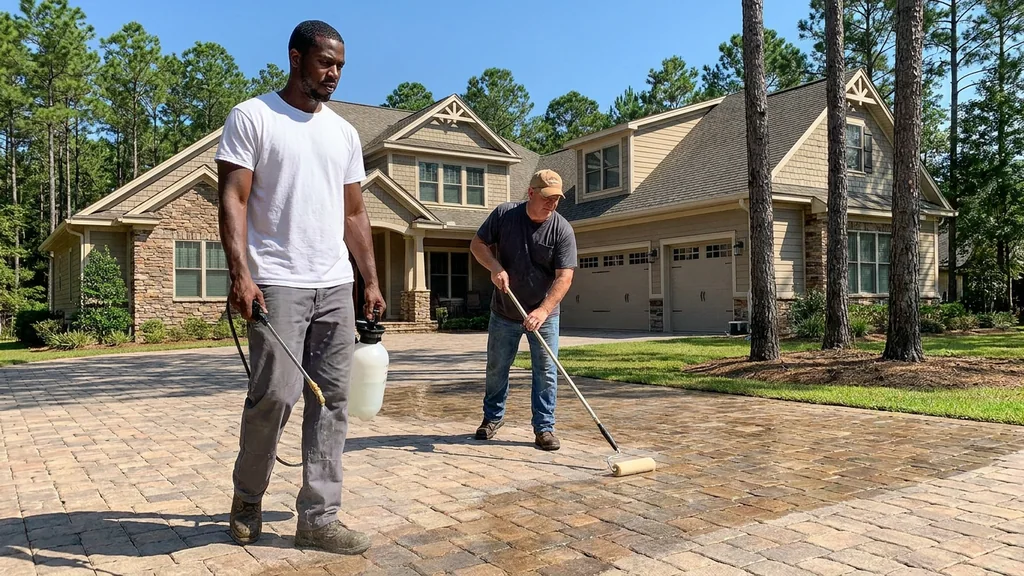
The coat goes on in the finish you picked, usually sprayed and then back-rolled into the joints. Walking on it is usually fine after a few hours, and the car should wait about a day. Expect the next coat somewhere in the two to five year span most companies mention. Water that beads on the surface tells you the coat is still working.
Complete paver services in Jacksonville
A Jacksonville paver job moves through four stages in a set order. First comes a wash that lifts dirt, mildew and stains, followed by any repairs and fresh joint sand. The surface then dries completely, and the sealer goes on last so nothing gets trapped underneath. To ask how long each stage would take at your home, call (904) 552-3813.
Each surface wears in its own way. Driveways take tires and oil, pool decks need grip for bare feet, and patios under trees collect leaves and mildew. Front walks may ride over roots that have pushed a few pavers up over the years. List the surfaces you want sealed when you request your free quote, and point out any trouble spots you already know about.
Sealers come in two broad types, film-forming and penetrating. Wet look and semi-gloss build a film and deepen color, while matte soaks in and leaves little or no shine. An older coat limits the choice, since water-based products will not bond over solvent-based ones. Call (904) 552-3813 to talk through the options for your Jacksonville pavers before you decide.
The calendar matters too, more than most people expect. Rain is heaviest from May to September, often in quick afternoon storms, while November to April is usually drier and steadier. Watering days count as well, since a soaked paver cannot be sealed that day. For a date that works with the weather and your sprinkler schedule, request your free quote.
Questions to ask before you hire
- Is the joint sand replaced before the sealer goes on?
- Should I turn off my irrigation, and when can it come back on?
- What is your payment schedule, and is a deposit required?
- How do you handle a rainy forecast on my scheduled day?
- Can I get a copy of your liability coverage and any license required for this work?
- How do I get hold of you if something looks off after the job?
- Does your quote cover the cleaning, new sand and any fixes?
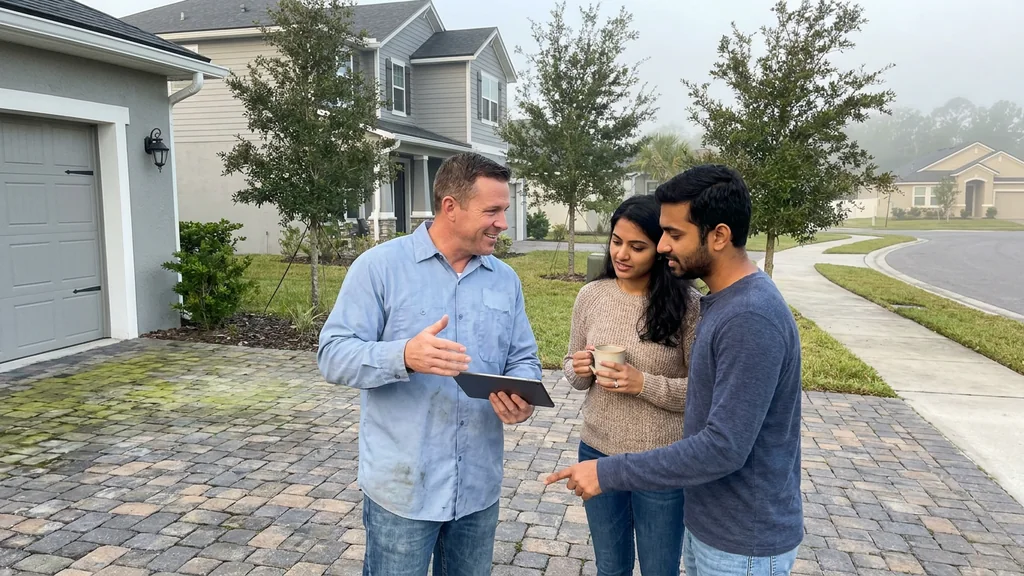
Why local matters in Jacksonville
A contractor who works in Jacksonville knows the city is many places in one. River streets bring flood history, older neighborhoods bring roots and shade, and newer areas bring open, sunny driveways that fade. That shapes the questions asked before any price is given. To reach someone who knows your side of town, call (904) 552-3813.
Local timing helps as well. Summer storms, watering days and slow-drying shade all decide when a coat can go down at your house. A contractor who works here plans around them rather than sealing damp pavers to stay on schedule. You can request your free quote and ask how a rainy week would be handled.
Distance matters in a city that spans about 874 square miles. A contractor close to your neighborhood can come out for the estimate sooner and return easily if the weather pushes the date. That makes scheduling simpler for you and keeps a rain delay from turning into a long wait. To set up a free visit, request your free quote, with no obligation to go ahead.
Which Jacksonville landmarks help a contractor place my home?
Naming a nearby landmark is the quickest way to place your home in a city this big. Downtown, the Main Street Bridge crosses the St. Johns, and Friendship Fountain has drawn crowds on the Southbank since 1965. Nearby, the Treaty Oak spreads its 145-foot crown over Jessie Ball duPont Park, shading a patch of ground far wider than most yards. If you live near the river and downtown, call (904) 552-3813 and name your neighborhood.
Farther out, the Dames Point and Mathews bridges link the Arlington side to the rest of the city. Hanna Park holds 447 acres of coastal hammock near Mayport. Kingsley Plantation, from 1798, sits inside the Timucuan Preserve, which spans more than 46,000 acres. Wherever you are in Jacksonville, request your free quote and mention the closest bridge, park or main road.
Frequently Asked Questions
What is the average cost to seal pavers in Jacksonville?
For most homes, jobs land between $1.50 and $3.00 per square foot to clean, sand and seal, the range companies across Northeast Florida commonly publish. Repairs, heavy stains and lost joint sand push a Jacksonville job toward the high end. A quote with the measured area lets you check the math. Patios and pool decks are measured and added to the driveway.
How much should I pay for paver sealing in Jacksonville?
You should expect a price inside the published $1.50 to $3.00 per square foot range for the full job. Make sure the quote includes cleaning, new joint sand and any resetting of sunken pavers. A low number that leaves out those steps can cost more later. Ask for each step to be listed so you can compare bids fairly.
Is there a downside to sealing pavers in Jacksonville?
The main downsides are upkeep and timing. Coats wear and need renewing, and a wet look shows scuffs sooner than matte. Sealer also needs a dry surface, so summer storms and watering days can push your date back. None of these are reasons to skip sealing, only things to plan around.
How often should Jacksonville pavers be resealed?
Many companies say a coat lasts two to five years before it needs renewing. Busy driveways, heavy shade and sprinkler spray push Jacksonville pavers toward the shorter end. Splash a little water on the surface: if it beads, the coat still works. If it soaks in and darkens the paver, plan the next one.
How much does it cost to clean and reseal pavers in Jacksonville?
Cleaning and resealing usually falls in the same $1.50 to $3.00 per square foot range, since that price covers the wash, sand and coat together. An old coat that is peeling or patchy may need more work first. Ask whether the quote covers that, and whether any repairs are included. Patios, walks and pool decks priced together raise the total square footage.
How much does it cost to seal outdoor pavers like a pool deck?
Pool decks and patios are priced in the same way, by the square foot, within the $1.50 to $3.00 range companies publish. A pool deck may need an anti-slip additive in the coat, so ask about it during the visit. Measuring the deck with the driveway can make the total easier to compare. Larger areas raise the total even at the same rate.
Can brand-new pavers in Jacksonville be sealed right away?
Usually not, because new pavers can push out a white haze called efflorescence. Unilock says pavers must be clear of it before sealing and suggests waiting a few months for it to fade. A contractor can tell you when your new pavers are ready. The haze does not weaken the pavers, so waiting does no harm.
What happens if it rains right after the pavers are sealed?
The contractor plans the day to keep that from happening. A Jacksonville paver company says moisture in the pavers can leave a cloudy or white finish, so the forecast gets checked before work starts. In the wet season, a morning job gives the coat the most time before afternoon storms. If rain looks likely, the date simply moves.
Ready for a Free Estimate in Jacksonville?
Call (904) 552-3813 and tell us about your pavers.
Free, no obligations