
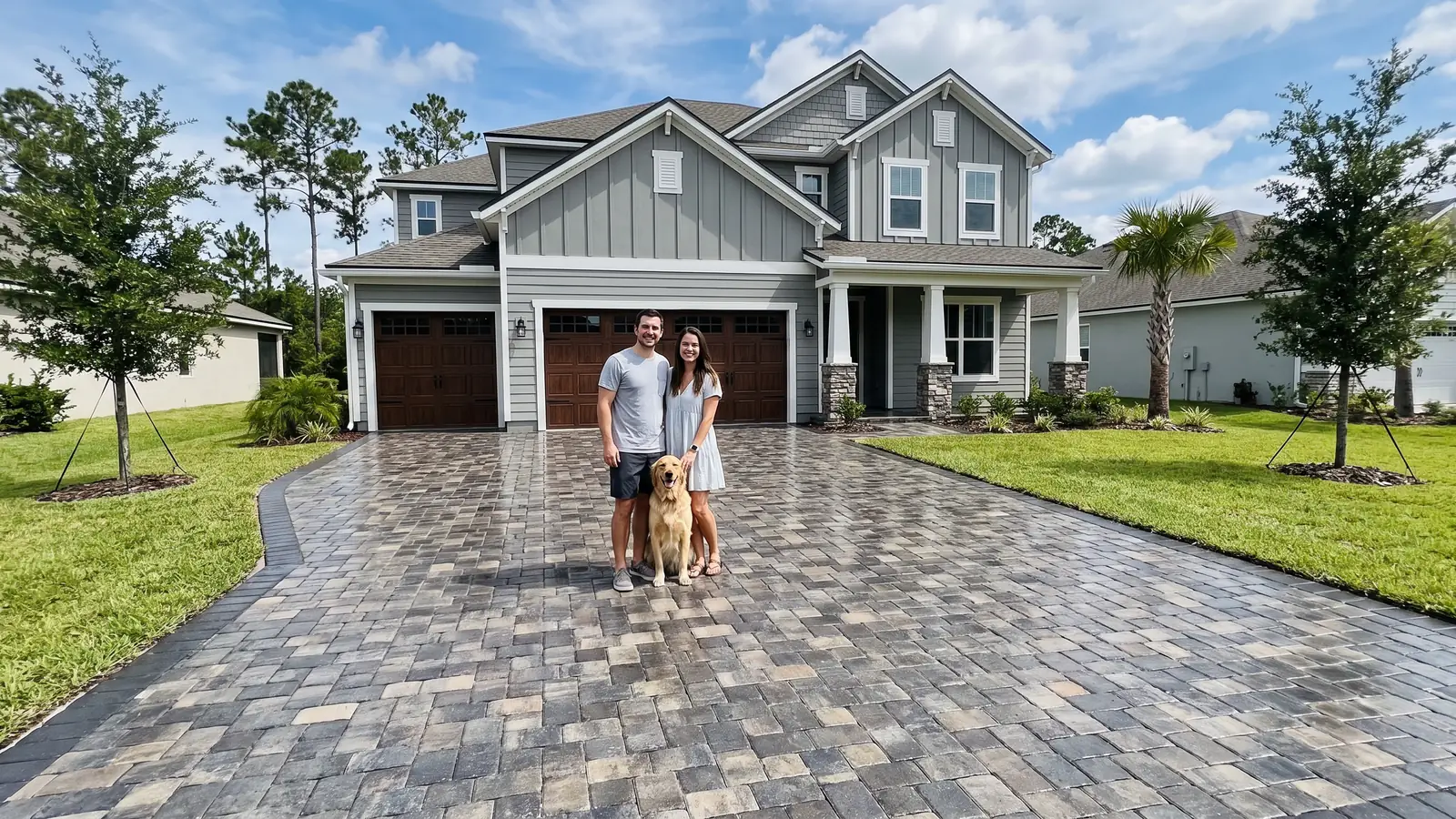
Paver sealing for St. Augustine homes
Paver Sealing in St. Augustine, FL
Pavers fading in St. Augustine? Get local help from Paver Sealing St Johns. Call (904) 552-3813
- Brings out deeper paver color
- Fresh joint sand helps lock pavers in place
- Gives weeds less room to grow
- Makes the surface easier to keep clean
- Free estimate, no obligation
Request a Free Estimate
Free, no obligations.
Fast, careful paver sealing help in St. Augustine
Paver sealing is available to St. Augustine homeowners from the north city streets off San Marco Avenue to Davis Shores across the Bridge of Lions. A local contractor cleans, re-sands and seals driveways, courtyards and walks, and the estimate is free. After you request your free quote, look for a reply within 1 business day, usually much sooner.
Think of a brick-red driveway that has gone dull and patchy, with weeds lining every joint after a wet summer. Once it is cleaned, filled with proper sand and sealed, the pavers sit tight and the color looks rich again. If you prefer to talk it through first, call (904) 552-3813 and describe what you see.
Why St. Augustine chooses Paver Sealing St Johns
St. Augustine homeowners tend to choose a local paver contractor because tides, old houses and historic rules can all change the plan. You can request your free quote and hear how those apply on your block.
A visit that costs nothing
The contractor looks over your St. Augustine pavers for free, and you get a price before anything is scheduled.
A rate to measure against
Area companies commonly publish $1.50 to $3.00 per square foot for cleaning, re-sanding and sealing, so compare each bid.
A look that fits an old house
Matte suits a Bungalow or Revival front. A wet look deepens color but shows scuffs sooner on a drive.
Every choice stays yours
The date, the finish and the final yes are all up to you. A St. Augustine estimate brings no obligation to hire.
Get Your Free Estimate in St. Augustine
Tell us about your pavers in St. Augustine.
Free, no obligations
What paver problems show up most in St. Augustine?
High tide and rain arriving together
The city says St. Augustine can flood when ordinary rain lands at the same time as a high tide. Hospital Creek is one of the waters it lists, and it runs along the eastern edge of Fullerwood Park and Nelmar Terrace. Pavers that sit under brackish water for a few hours can be left with silt and loose joints. That grit has to come out before any sealer goes on. Low yards near the marsh edge tend to show it first, with a thin line of mud along the lawn.
Davis Shores land that was raised from the bay
A state marker says Davis Shores was swampy lowland until 1925, when D.P. Davis raised it with a 1,500-acre dredge and fill project. The city lists Davis Shores among the areas that flooded in Hurricane Matthew, and Irma reached many of the same places. Pavers on low lots there may have been under water more than once. Each event can strip joint sand and leave a film behind. The low end of a Davis Shores driveway is often where joints sit emptiest after a storm.
Puddles that hang around after storms
St. Augustine averages about 50 inches of rain a year, mostly in a wet season from May through October. The city also says some local soils do not drain well. Water that sits on pavers for hours keeps joints soft and grows green film in shady corners. Those low, wet spots are where sand loss and weeds tend to start. A slight dip in a courtyard can hold a puddle for most of a day.
Joints filled with the wrong sand
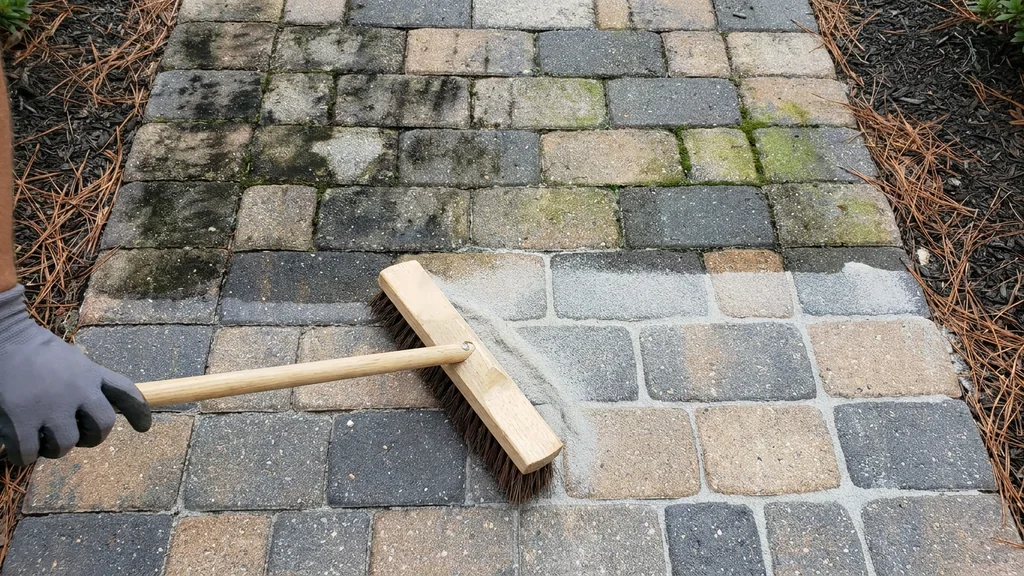
A St. Augustine area paver company says many local installs used play sand. Play sand washes out under summer storms and sprinklers, and the empty gaps fill with dirt and weeds. Once joints widen, the pavers can start to shift. Proper joint sand needs to go in before the sealer can hold it. Weeds coming up in a neat line between pavers are a common sign of this.
Salt air off the bay and Salt Run
Matanzas Bay sits between downtown and Anastasia Island, and Salt Run is close to Davis Shores. A Ponte Vedra Beach paver company says salt settles on unsealed pavers and works into the pores. With strong sun, that leaves the surface chalky and washed out. Homes near the water in St. Augustine tend to see it first. A sealed surface keeps more of that salt on top, where a rinse can reach it.
Do paver jobs differ between Davis Shores and the north city districts?
Yes, because the north city neighborhoods and Davis Shores grew on two kinds of ground. Nelmar Terrace and Fullerwood Park sit east of San Marco Avenue, with their eastern edges on Hospital Creek and its tidal marsh. Davis Shores sits across the Bridge of Lions on land raised from swamp in the 1920s. Say which side of the bay you live on when you request your free quote.
Nelmar Terrace was re-platted in 1913 and sold as an upscale suburb with big lots and deed rules on design. Its homes run from Spanish and Mediterranean Revival to Tudor, Craftsman and Bungalow. Fullerwood Park, just north, is mostly one- and two-story Colonial Revival and Bungalow homes on a grid of streets. Older masonry and wood beside pavers call for care with rinse water, so call (904) 552-3813 and say what your house is built from.
Davis Shores was laid out with curving streets, wide boulevards and triangular lots, a plan the state marker says still shows today. Odd lot shapes can mean drives and walks that bend or narrow toward the street. Low ground there has taken floodwater, so the low end of a drive deserves a close look. Mention your street in Davis Shores when you request your free quote, with no obligation.
What does paver sealing cost in St. Augustine?
Northeast Florida companies commonly publish $1.50 to $3.00 per square foot as the going rate to clean, sand and seal. A St. Augustine job tends to land higher when silt from high water, play sand or a failed coat needs extra work. A Jacksonville company lists stripping old sealer as an added cost. You can request your free quote for a free figure on your layout.
Access shapes the total too, and older lots can be tight. A courtyard behind a 1920s home may mean gear is carried in by hand rather than rolled up the drive. Repairs to a sunken apron or a low corner usually show up as their own line. Call (904) 552-3813 and ask the contractor to break each area out in writing.
| Paved area | Typical example | Clean, sand and seal |
|---|---|---|
| 300 sq ft | Small patio or walkway | $450 to $900 |
| 600 sq ft | Two car driveway | $900 to $1,800 |
| 1,000 sq ft | Large driveway or pool deck | $1,500 to $3,000 |
| 1,500 sq ft | Driveway plus pool deck | $2,250 to $4,500 |
Math based on the $1.50 to $3.00 per square foot that Northeast Florida paver companies published as of November 2026. Your contractor sets the actual price after seeing the surface. Repairs, leveling and stripping failed sealer are usually extra.
How does a paver sealing job work in St. Augustine?
Walk the lot and find the low spots
The visit starts with where water runs and where it sits on your St. Augustine property. The contractor checks for sunken pavers, loose edges and spots near a creek or seawall that take water. A Jacksonville company says sealing over a dip only preserves it, so low areas get reset first. This is also when you should mention any past flooding. Point out any spot where water stands after a storm.
Clean off silt, growth and old coating
Cleaning removes dirt, green film, salt haze and any coat that has failed. Silt left by high water often hides deep in the joints and needs a thorough flush. Rinse water is kept off older masonry and wood siding. When the wash is done, the true color of the pavers should show. Coquina, brick or old stone edging nearby gets a lighter touch.
Replace play sand with joint sand
Washing pulls out old sand, and in many local yards that sand was play sand to begin with. Proper joint sand goes into every gap and is swept clean off the face. Full joints keep pavers from shifting and leave weeds little room. Ask what color of sand is going in, since it frames every paver. On a St. Augustine courtyard with narrow joints, this step takes patience.
Dry the surface completely
Sealer needs dry pavers, and a damp surface is the common cause of a white, cloudy coat. In St. Augustine that can mean waiting out an afternoon storm or a wet morning. Shaded courtyards and low corners dry last. If rain or a high tide is coming, the safe move is to wait a day. A contractor may check the tide chart for lots near the creek or bay.
Seal it and let it cure
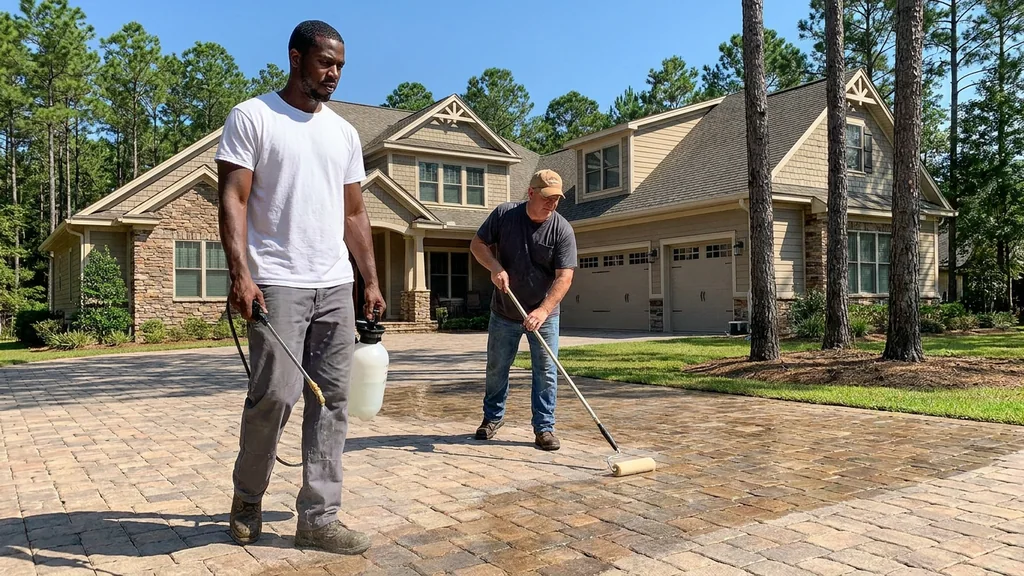
Pros usually spray the sealer, then back-roll it to spread it evenly and work it into the joints. A wet look shows scuffs sooner than matte, so think about where cars park and turn. One Jacksonville company says people can walk on it after a few hours and should give cars about a day. Ask what that means for your St. Augustine driveway. Keep pets and bikes off the fresh coat until it sets.
Complete paver services in St. Augustine
In St. Augustine the work follows a set order: clean, refill the joints, let it dry and then seal. Any sunken section gets reset before the cleaning starts. Doing the steps out of order can trap dirt or leave a cloudy coat. For a sense of how long your own job would run, call (904) 552-3813.
Courtyards behind older homes often stay shaded and damp, so green film builds there first. Driveways take tires and, on low lots, the occasional tide. Front walks beside masonry or wood need a careful rinse to keep cleaner off the house. List the surfaces you want done in St. Augustine when you request your free quote.
Sealer choice starts with the coat already there, since a water-based product will not grip on top of a solvent-based one. After that comes the finish, matte or wet look. A dense paver under a heavy gloss can look much darker than you expect. Call (904) 552-3813 to talk through a finish that suits your St. Augustine home.
St. Augustine's rainy months run from May to October, with frequent summer thunderstorms. Pavers need to be fully dry before sealing, and a shaded courtyard can lag a day behind the drive. Lots near Hospital Creek or the bay may also need a check of the tide calendar. To book a dry day that fits your schedule, request your free quote.
Questions to ask before you hire
- Is the joint sand replaced before the sealer goes on?
- How will you protect my yard, pool and screens during the job?
- Which product do you recommend for my pavers, and how will it react with the old sealer?
- Can I get a copy of your liability coverage and any license required for this work?
- What is your payment schedule, and is a deposit required?
- Does your quote cover the cleaning, new sand and any fixes?
- About how long before my pavers need sealing again?
Why local matters in St. Augustine
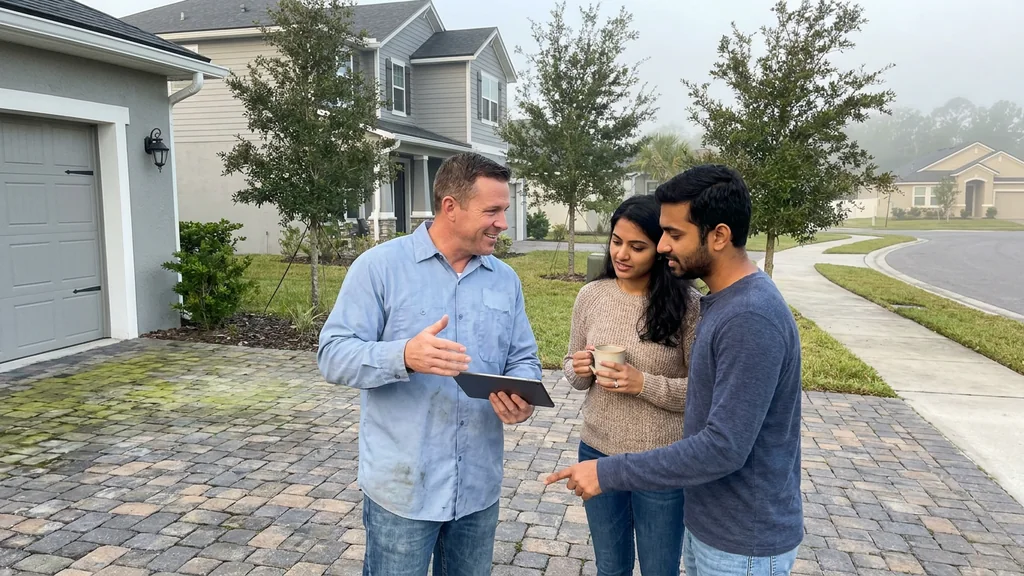
A contractor who knows St. Augustine thinks about tides, drainage and old masonry before starting. Those three things decide how much cleaning a job needs and how carefully it has to be rinsed. Someone from far inland may not ask whether your yard has taken water. To reach a contractor who works across this part of St. Johns County, call (904) 552-3813.
Historic rules can matter here too. The city requires a Certificate of Appropriateness for most work in its five Historic Preservation zoning districts, and its fee list includes site work. A local contractor knows to ask about your district before quoting a change. You can request your free quote and check the city's GIS map for your address at the same time.
Timing takes local sense as well, since summer storms and high tides can come on the same afternoon. A contractor used to St. Augustine weather books around both and waits for dry pavers. Waiting a day costs far less than stripping a cloudy coat later. If your street floods at high tide, request your free quote and say so, with no obligation.
Why does St. Augustine's age change how pavers should be handled?
It changes things because St. Augustine has been built and rebuilt since 1565, and many homes sit beside old stone, brick and wood. The city's early builders quarried coquina, a shell stone, for a seawall in the 1690s. In the north city, Fullerwood Park still holds the Hildreth House from about 1870 on Fullerwood Avenue. If your pavers sit next to older walls like these, request your free quote and ask how rinse water will be handled.
Downtown, the Castillo de San Marcos, Flagler College in the old Ponce de Leon Hotel and the Lightner Museum draw visitors to St. George Street. The Bridge of Lions, finished in 1927, leads east toward Davis Shores, where only eleven buildings went up before the 1926 land bust. In Nelmar Terrace, Wallace Neff designed Los Robles at 24 Nelmar Avenue. Near any of these St. Augustine landmarks, call (904) 552-3813 and name your block.
Frequently Asked Questions
What is the typical cost to seal pavers at a St. Augustine home?
Most homes fall between $1.50 and $3.00 per square foot for the full clean, sand and seal, based on what area companies commonly publish. Silt from high water, play sand and an old failed coat push a St. Augustine job toward the top. Your total comes down mostly to square footage.
What is a fair amount to pay for paver sealing in St. Augustine?
A fair quote falls inside that same published range and lists each area. Ask for the square footage of the drive, walks and courtyard separately. Repairs and stripping old sealer should show as their own lines so you can compare bids.
Does it cost more to seal outdoor pavers on Davis Shores?
The rate range is the same, but low lots can need more prep. Davis Shores flooded in Hurricane Matthew, and pavers that have been under water often need extra cleaning and new sand. A tight or oddly shaped lot can also add time. Ask the contractor to look at the low end of the drive first.
Is it a good idea to seal pavers this close to the St. Augustine coast?
Yes, for most homes it helps. A St. Augustine paver company says sealing protects against stains, fading and erosion. Near the bay, it also keeps salt from working into the pores as easily. Sealed pavers also rinse clean more easily after a storm.
Does a home in a city historic district need review for paver work?
It might. The city requires a Certificate of Appropriateness for most work in its five Historic Preservation districts, and its fee list includes site work. The page does not name sealing, so check your address on the GIS map and ask city staff before work starts. Getting that answer early keeps the project on schedule.
My yard took water from Hospital Creek. When can the pavers be sealed?
They can be sealed once they are clean, refilled with sand and fully dry. Floodwater leaves silt in the joints and pulls sand out, so those steps come first. A coat laid over damp, gritty joints tends to cloud and lift early.
How long should new pavers wait before the first coat?
Wait about 60 to 90 days, a St. Augustine paver company says. That gives the pavers time to settle and lets any white efflorescence come to the surface. It can then be treated before the sealer goes on. Ask your installer for the date the pavers went in.
How many years does a coat last near the bay?
A St. Augustine company suggests resealing every 3 to 5 years, depending on traffic and weather. Salt, full sun and daily tires push that toward the short end. If water stops beading on the surface, the coat is wearing out. Splash a little water on the pavers once a year to check.
Ready for a Free Estimate in St. Augustine?
Call (904) 552-3813 and tell us about your pavers.
Free, no obligations