
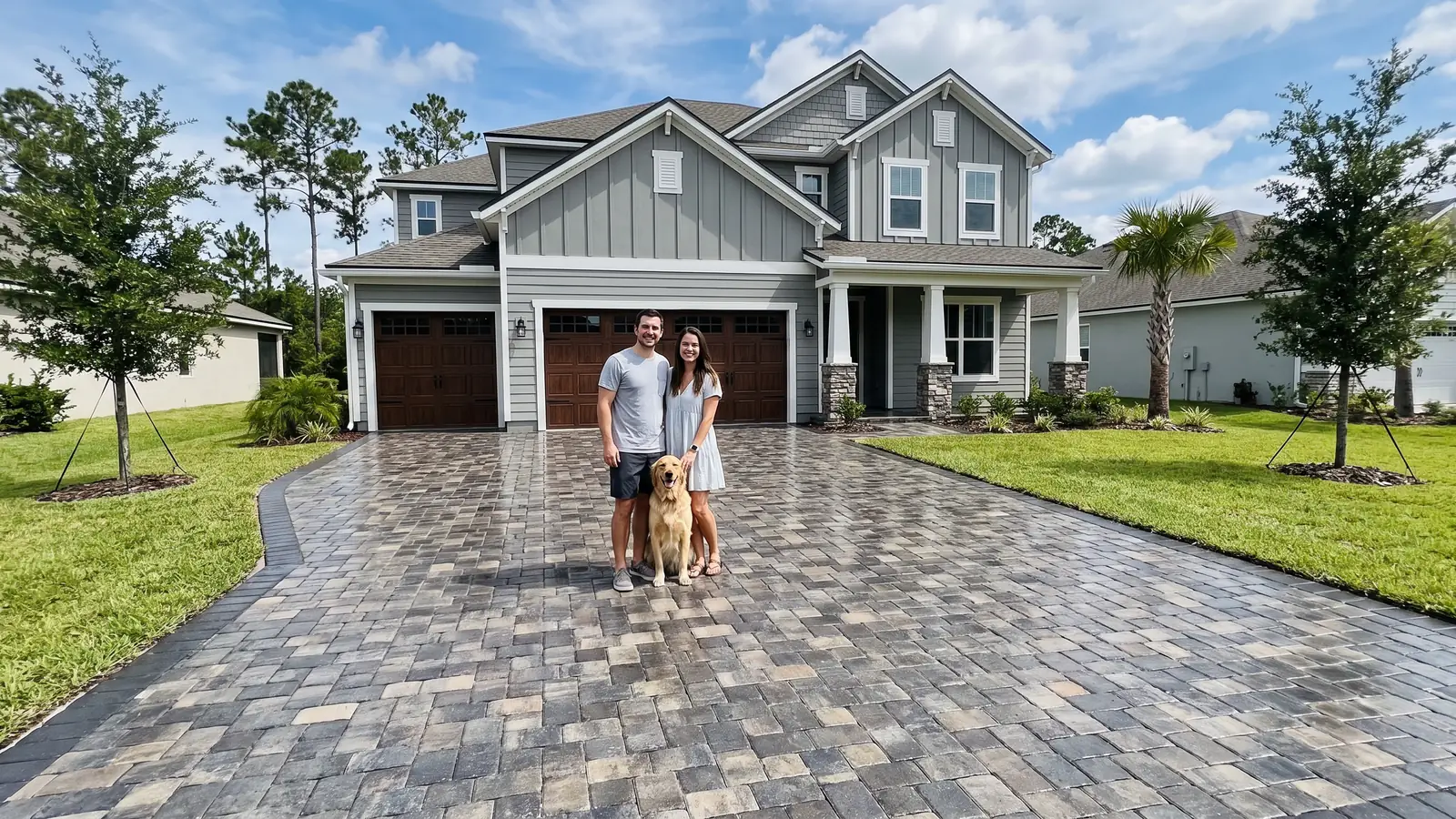
Paver sealing for Lake Asbury homes
Paver Sealing in Lake Asbury, FL
Pavers fading in Lake Asbury? Get local help from Paver Sealing St Johns. Call (904) 552-3813
- Brings out deeper paver color
- Fresh joint sand helps lock pavers in place
- Gives weeds less room to grow
- Makes the surface easier to keep clean
- Free estimate, no obligation
Request a Free Estimate
Free, no obligations.
Fast, careful paver sealing help in Lake Asbury
Lake Asbury paver sealing is open to every home in the community, from the older lake streets to the newer east side, and the estimate is free. A local contractor handles the wash, the joint sand and the clear coat on drives, patios and pool decks. Ask for a quote with request your free quote, and a reply comes within 1 business day, usually much sooner.
Here is the change most owners notice. A drive that looked dusty and pale beside the lawn turns a deep, even color, and the seams stop sprouting grass. Rain beads up and rolls off instead of soaking in. For a quick talk before you book, phone (904) 552-3813.
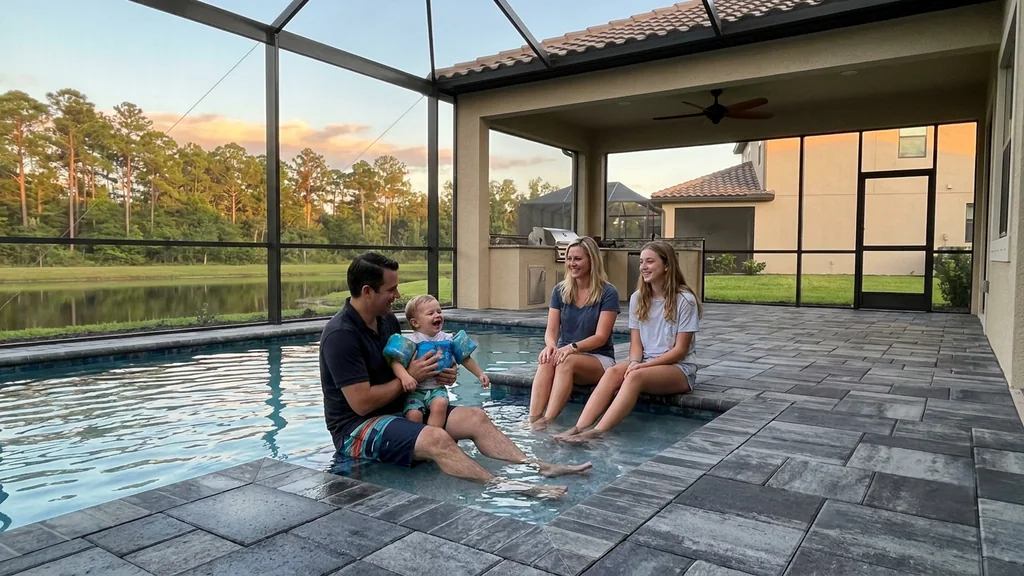
Why Lake Asbury chooses Paver Sealing St Johns
Around Lake Asbury, owners lean toward a contractor based nearby, someone who has worked both the 1970s lake homes and the brand new builds farther east. Phone (904) 552-3813 to hear how that experience fits your property.
Someone comes to you
A contractor drives out to your Lake Asbury home, walks the pavers with you and leaves a written number. No fee is charged.
The posted rate
Across Northeast Florida, the posted range for a wash, sand and seal is $1.50 to $3.00 per square foot. Measure bids against it.
A finish to suit a lake home
Matte looks quiet and natural next to a lawn and trees. Wet look brings out deeper color, yet tire scuffs appear on it faster.
Set by your timeline
Book when it suits you, or not at all. The quote stays yours to think over for as long as you need, with zero obligation attached.
Get Your Free Estimate in Lake Asbury
Tell us about your pavers in Lake Asbury.
Free, no obligations
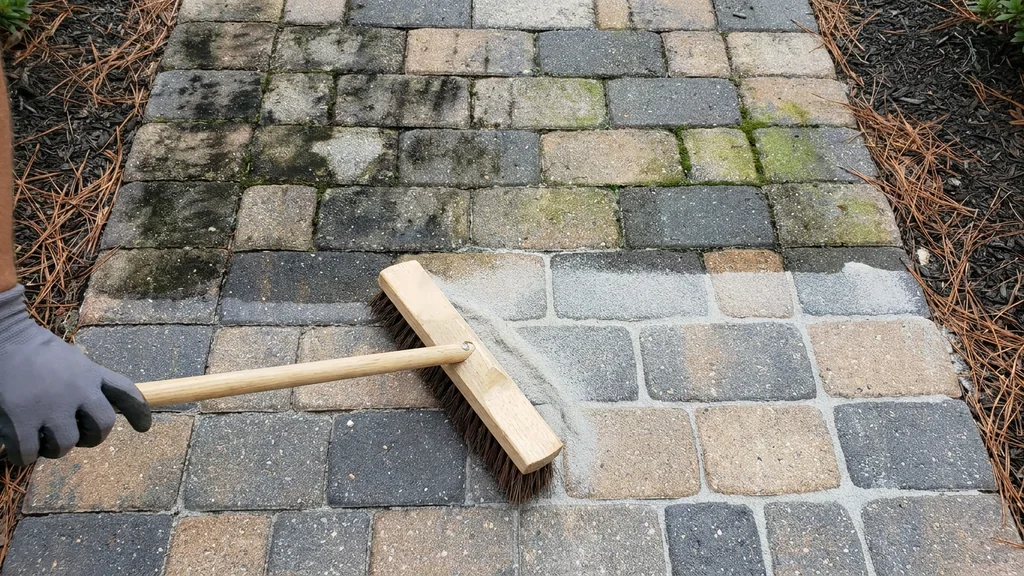
What paver problems show up most in Lake Asbury?
Black Creek silt after a big storm
Lake Asbury's north line is Black Creek, a branch of the St. Johns River. Two days after Irma passed in 2017, the creek reached a record flood stage of 30.52 feet. Creek water carries fine silt, and it settles into paver seams and dulls the surface. Coating over that layer would seal the grime in for years. So the first job on a flooded drive is a deep wash and fresh sand, not sealer. In the market report, nine in ten sampled addresses sit outside the FEMA flood zone. Lots closest to the creek still deserve a careful look after any high water. While the water was up, Lake Asbury Junior High served as a special needs shelter and filled to capacity. That tells you how hard the storm hit this corner of Clay County.
Mystery coats on 1970s and 1980s pavers
Around the lake, the median home in one market report was built in 1978. A house that age has likely changed hands a few times, and so have its pavers' coats. Nobody may remember which product went down last. Water-based sealer will not stick over solvent-based sealer, so the wrong pick can peel within months. A contractor tests a small corner first to learn what is on the surface. Patchy shine, flaking and gray film are all clues that the old coat is giving out. A test spot costs little and can spare a whole drive from a coat that fails.
Sealing new east-side pavers too early
Lake Asbury has spread east, and a 2014 report said the area could hold 22,780 homes. Many of those newer lots have pavers that are only months old. One St. Johns County paver company says new pavers should wait about 90 days before a first coat. A Jacksonville company adds that 30 to 60 days lets haze, called efflorescence, work its way out. Sealing sooner can lock that white haze under the finish. Back in 2010, the census counted only 3,048 housing units here, so a large share of today's homes are recent. Their pavers may still be on their first year or two.
Seams that drain dry in sandy ground
The USDA first described the Penney soil series in Clay County and calls it excessively drained sand. Water races through it, and in a hard rain the joint sand can go along for the ride. Normal rainfall around Jacksonville is now 53.4 inches a year, with summer and fall gaining most. A local paver company notes that storms can strip joints badly enough to need repairs. Ants, weeds and rocking pavers tell you the seams are running empty. Seams beside downspouts and along the lowest edge of a drive tend to empty first.
Milky or white sealer
A cloudy, white finish is a common sealer complaint. A Jacksonville paver company traces nearly all of those calls to damp pavers or a coat laid on too thick. Lake Asbury summers are humid, and a patio washed in the morning may still hold water by afternoon. The fix starts with patience, since a dry surface is the only kind that takes a clean coat. If your pavers already look milky, the contractor has to deal with that layer before adding anything. Shade from big oaks stretches that drying time even more.
Which parts of Lake Asbury tend to need the most paver work?
The older streets around the lake usually need the most. Arthur Moore Drive, Lake Asbury Drive, Wesley Road and Dow Court hold homes from decades back, with a 1978 median build year. Pavers there often carry worn coats and joints that have sunk low. Mention your street and the age of your pavers when you request your free quote.
On the newer east side, the work looks different. Population rose from 2,228 in 2000 to 11,036 in 2020, and homes near Plantation Ridge Drive, East Glenhaven and Battery Bluff tend to have younger pavers. Those may need a first coat rather than a strip and redo. Phone (904) 552-3813 and ask whether your pavers have cured long enough.
Listings in the area run from about 1,568 to 3,741 square feet, so layouts vary widely. A larger house may have a circle drive, a pool deck and a side path all in one quote. The market report lists no CDD for the lake area, which leaves the finish up to most owners. If an HOA does cover your street, read its rules, then request your free quote.
What does paver sealing cost in Lake Asbury?
Most Northeast Florida firms post $1.50 to $3.00 per square foot for a full wash, sand and seal. A Lake Asbury quote begins with measuring, since a circle drive and pool deck add up fast. A small front walk on a newer lot can come in well under a full lake home layout. You can request your free quote at no charge to see your own figure.
What sits on the surface also matters. One Jacksonville company says the price covers washing, drying time and new joint sand, and drying slows down in humid months. Creek silt, a failing coat and a milky finish all add labor. Phone (904) 552-3813 to learn where your pavers are likely to fall in the range.
| Paved area | Typical example | Clean, sand and seal |
|---|---|---|
| 300 sq ft | Small patio or walkway | $450 to $900 |
| 600 sq ft | Two car driveway | $900 to $1,800 |
| 1,000 sq ft | Large driveway or pool deck | $1,500 to $3,000 |
| 1,500 sq ft | Driveway plus pool deck | $2,250 to $4,500 |
Math based on the $1.50 to $3.00 per square foot that Northeast Florida paver companies published as of November 2026. Your contractor sets the actual price after seeing the surface. Repairs, leveling and stripping failed sealer are usually extra.
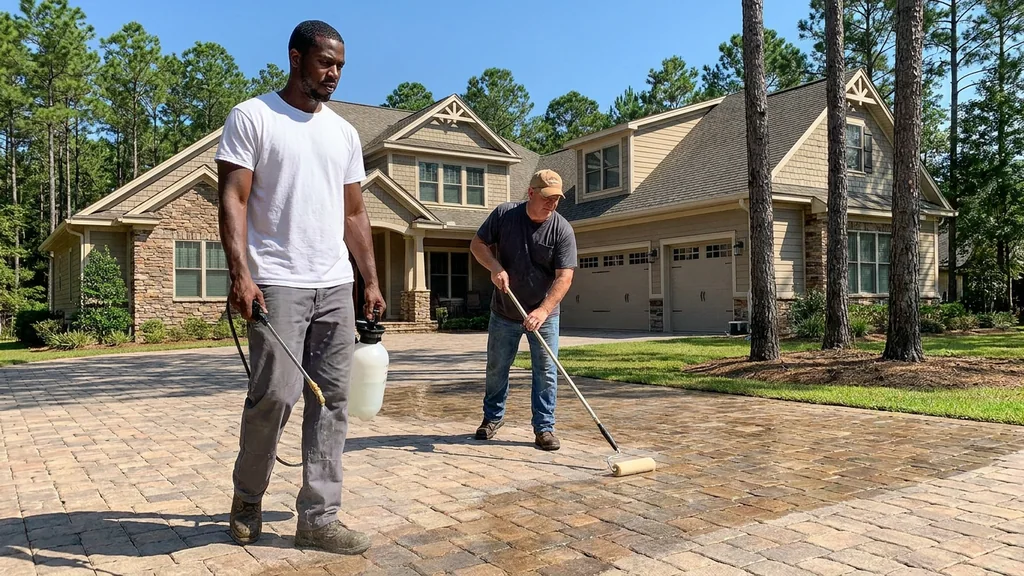
How does a paver sealing job work in Lake Asbury?
Measuring and testing the surface
First, the contractor measures each paved area at your Lake Asbury home. A small test spot shows what coat, if any, is already there. That matters, since a water-based coat cannot be laid over a solvent-based one. Sunken or loose pavers get marked for resetting. You see the full plan and price before anyone picks up a hose. Questions about matte versus wet look fit in here, too. Nothing moves ahead until you say yes. Mention any time Black Creek water has reached your property. Homes as close as Village Park and Eagle Point Middleburg get the same walk-through.
Clearing silt and old coats
Washing comes second, and it is the longest part of most jobs. Silt from creek floods, gray film and a failing coat all have to come off. Rinse water stays away from the lake edge, flower beds and the pool. Low pavers are reset at this point so the surface is level before sand goes in. Stubborn marks get pointed out to you instead of hidden under sealer. A soft touch protects older paver faces from wear. Gray film on older faces comes off with patience rather than force.
Packing fresh sand into the seams
Since washing strips the seams, new sand is swept and packed in next. In fast-draining Clay County sand, full seams help keep pavers from rocking. Any extra sand is brushed off the tops before sealing. Seams that settle after the first pass get topped off again. Firm seams also leave fewer gaps for weeds and ants. Weeds that have rooted deep get pulled before the sand goes in. A second sweep catches any seams the first pass missed.
Waiting out the moisture
Fourth, the pavers sit until they are fully dry. Humid Lake Asbury air can slow that down, as one Jacksonville company notes about drying in humid months. Shady corners under big oaks usually dry last. A careful contractor checks those spots before opening a single bucket. Rushing this step is the main reason finishes turn white. A cooler, breezy day can speed things up. Waiting for that last shady corner is part of a careful job.
Laying the coat and letting it harden
Last, the sealer goes down by sprayer and is then rolled for even cover and full seams. One St. Johns County company says cure time runs 24 to 48 hours, based on heat and humidity. Feet can usually return before tires do. Keep sprinklers and pets off until the contractor clears it. Save the product name for the next round of sealing. A light hosing every few months keeps dust off the finish. Save a few spare pavers from any reset in case one cracks later.
Complete paver services in Lake Asbury
Four steps make up a Lake Asbury sealing visit, and they never change order. Washing clears silt, grime and any failing coat. Sand then goes back into seams the wash opened up, and the surface is left to dry fully before the coat. Phone (904) 552-3813 if you want each step explained for your property.
Different surfaces wear in different ways here. Drives carry pickups and daily traffic, pool decks bake in sun and stay wet from splashing, and garden paths sit in shade under oaks. Older drives near the lake often need more prep than a new patio out east. When you request your free quote, list each surface you have in mind.
Your two main sealer choices are the base, water or solvent, and the look, matte or wet. An old solvent coat on a 1970s drive rules out a water-based product until the old layer is handled. Contractors around Jacksonville commonly spray the coat and then roll over it, since rolling by itself can leave lap marks. Phone (904) 552-3813 for help picking a product.
Dry weather sets the calendar. Summer and fall bring the heaviest rain, while winters around Jacksonville have warmed, which opens up some dry, mild weeks. Brand new east-side pavers also need their waiting period before a first coat. To book a date that fits both, request your free quote.
Questions to ask before you hire
- About how long before my pavers need sealing again?
- How will you protect my yard, pool and screens during the job?
- How do you handle a rainy forecast on my scheduled day?
- Should I turn off my irrigation, and when can it come back on?
- Can you show me what a wet look and a matte finish look like?
- Do you seal a test area before doing the whole job?
- Is the joint sand replaced before the sealer goes on?
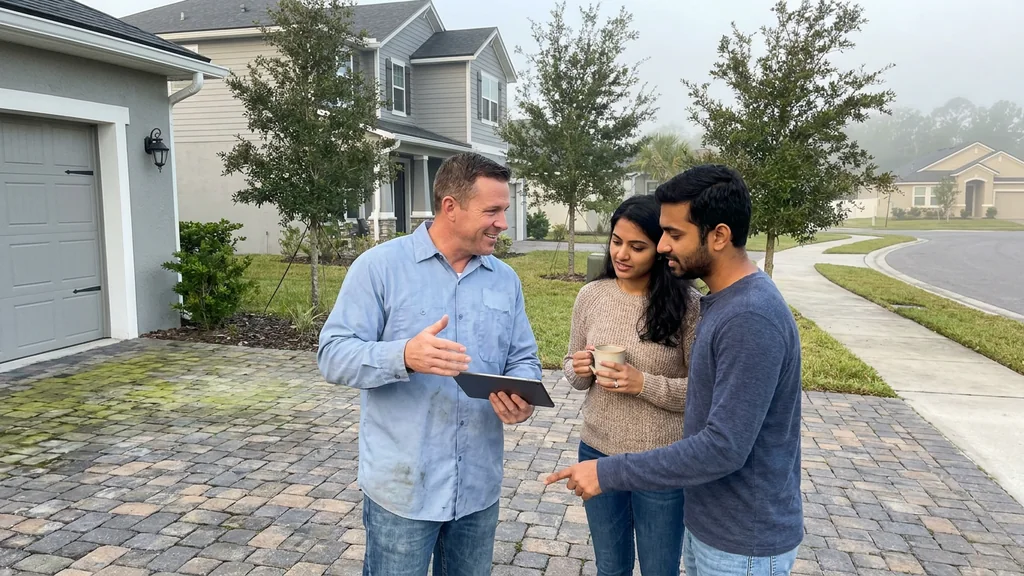
Why local matters in Lake Asbury
Black Creek history is a good reason to hire close to home. A nearby contractor remembers the record 30.52 foot crest after Irma and checks creek-side lots for buried silt. Someone from farther off may treat a flooded drive like any other. Phone (904) 552-3813 for a contractor who already works central Clay County.
Age is the second reason. A local contractor knows the lake streets date back to the 1970s and expects old coats there, while east-side pavers may be too new to seal. Getting that call right saves you a peeling finish or a hazy one. You can request your free quote and ask which group your home falls into.
Speed is the third. When a dry week finally shows up after summer storms, a contractor based nearby can be at your door quickly. That beats sealing damp pavers to keep a far-off schedule. Request a time with request your free quote, and there is no commitment.
Where exactly is Lake Asbury, and what is around it?
Lake Asbury sits north of the middle of Clay County, wrapped around a small reservoir that shares its name. Penney Farms is to the south, Middleburg to the west and Green Cove Springs to the southeast, with Black Creek on the north. Out on the lake, neighbors fish, paddle kayaks and take canoes out. Homes near that water can request your free quote anytime.
Roads around town have changed a lot lately. In 2025 an 18-mile piece of the First Coast Expressway opened, and the Henley Road interchange is the county's first diverging diamond. School life still runs through Lake Asbury Elementary, Lake Asbury Junior High and Clay High School. If you live close to any of them, phone (904) 552-3813.
Frequently Asked Questions
When should Lake Asbury pavers get a reseal?
Count on a reseal every two to five years, which is the span most companies give. Pool decks and drives in full sun usually come due first. Drip a little water on the surface: beads mean the coat still works, and a dark soak-in spot means it is spent. Shaded garden paths can often go longer between coats.
What makes a Lake Asbury paver sealing quote cost more?
Prep and labor drive the price, much more than the sealer itself. A Jacksonville paver company lists washing, joint sand, drying time and an even coat as the main parts. In Lake Asbury, creek silt, a failing old coat or a milky finish add more hours. Asking for each part as its own line makes two quotes easy to compare. Bigger layouts also mean more sand and more sealer.
Is paying a contractor to seal pavers worth it in Lake Asbury?
For most owners it is, because the prep decides how the coat turns out. Sealer laid on damp pavers or too thick can dry white, one Jacksonville company says. A contractor also tests what coat is already on the pavers before choosing a product. Fixing a hazy or peeling coat later tends to cost more than getting it right once. It can also reset any sunken pavers in the same visit.
Should paver sealer be sprayed on or rolled on?
Contractors usually use a sprayer first and a roller second. Spraying spreads the coat evenly, and rolling pushes it into the seams and stops puddles. One Jacksonville company says rolling by itself risks lap marks, while spraying by itself can lay down too much. Either way, thin and even beats thick and fast. Ask which tools the contractor plans to bring for your pavers.
Black Creek flooded my Lake Asbury driveway. Can it still be sealed?
It can, once it is washed, re-sanded and fully dry. Flood water leaves silt on top of the pavers and down in the seams. Sealing over that silt would trap it, so cleanup always comes first. Pavers the water shifted may need resetting during the same visit. Ask for the low edge of the lot to be checked closely.
How soon can brand new pavers be sealed?
Waiting is usually wise. One St. Johns County company suggests about 90 days, and a Jacksonville company says 30 to 60 days lets white haze work its way out. Ask the contractor to look at your new east-side pavers before you pick a date. Sealing over haze leaves a white cast that is hard to remove later. The pause also gives the new base time to firm up under daily use.
My sealer turned milky. What went wrong?
Most milky finishes come from sealing damp pavers or putting the coat on too thick, according to one Jacksonville company. The cloudy layer has to be dealt with before a new coat goes on. Mention it at the estimate so the contractor can plan for it. Strong sun on a dry day also helps the new coat set clear. In some cases the old layer has to come off first.
When can I park on newly sealed pavers in Lake Asbury?
Give it a day or two before parking. One St. Johns County company says cure takes 24 to 48 hours, depending on heat and humidity. On a humid Lake Asbury week, lean toward the longer end and ask the contractor to confirm. Walking is usually fine sooner, often within hours. Kids and pets can usually return before cars do.
Ready for a Free Estimate in Lake Asbury?
Call (904) 552-3813 and tell us about your pavers.
Free, no obligations