
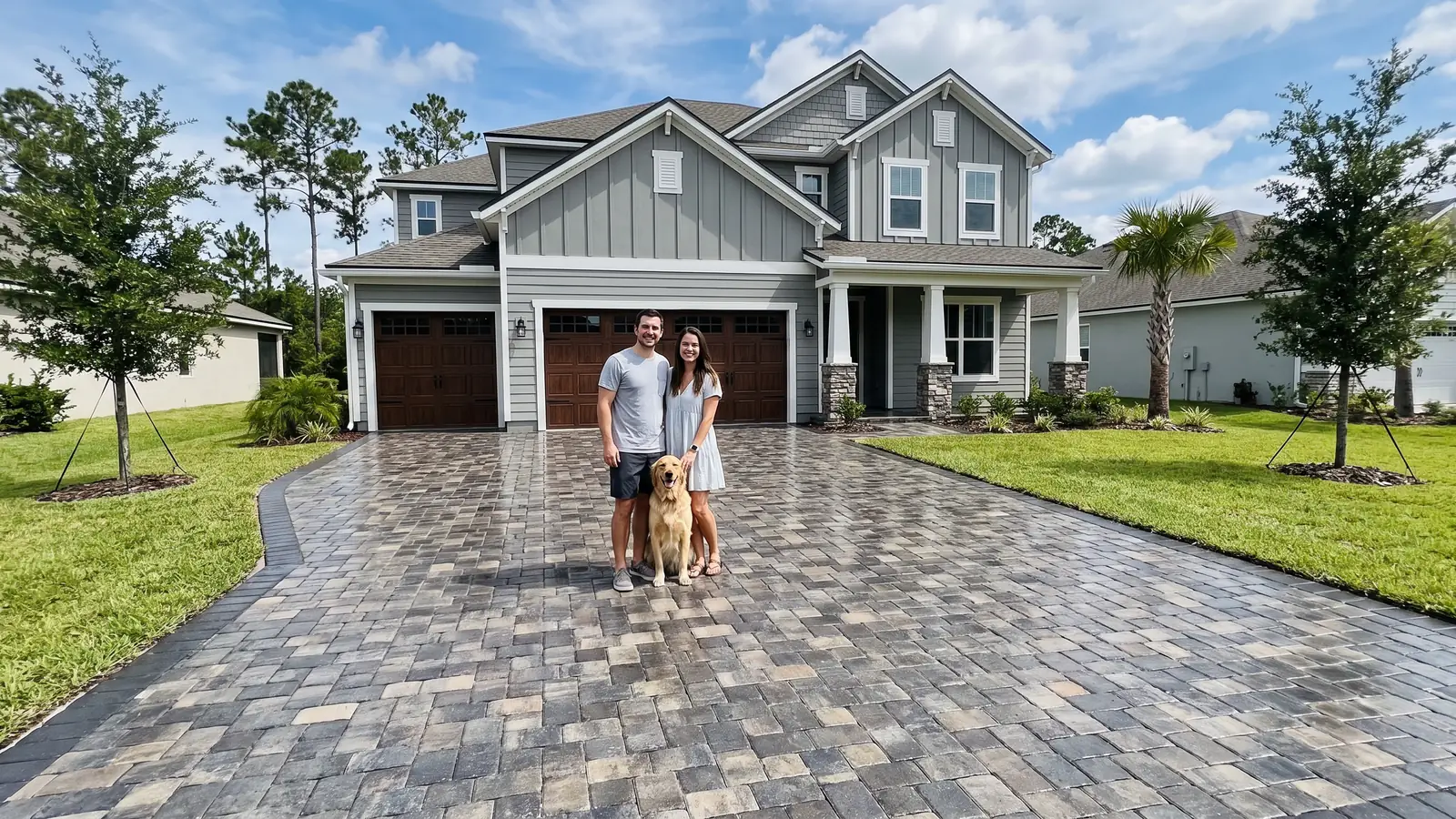
Paver sealing for San Jose homes
Paver Sealing in San Jose, FL
Midcentury ranches sit beside Spanish Revival homes in San Jose; whichever one is yours, call (904) 552-3813 about its pavers.
- Brings out deeper paver color
- Fresh joint sand helps lock pavers in place
- Gives weeds less room to grow
- Makes the surface easier to keep clean
- Free estimate, no obligation
Request a Free Estimate
Free, no obligations.
Fast, careful paver sealing help in San Jose
San Jose homeowners can book paver sealing for driveways, patios, walkways and pool decks anywhere between University Boulevard and San Clerc Road. A local contractor handles the cleaning, the new joint sand and the sealer, and the first visit to price it is free. Expect a reply within 1 business day of the time you request your free quote, usually much sooner.
Think of a ranch-house driveway that has gone pale in the sun, with dark mildew patches where the sprinklers land. Once it is washed, re-sanded and sealed, the color deepens and rain beads up and runs off. A quick call to (904) 552-3813 works too if you want to ask a question before anyone comes out.
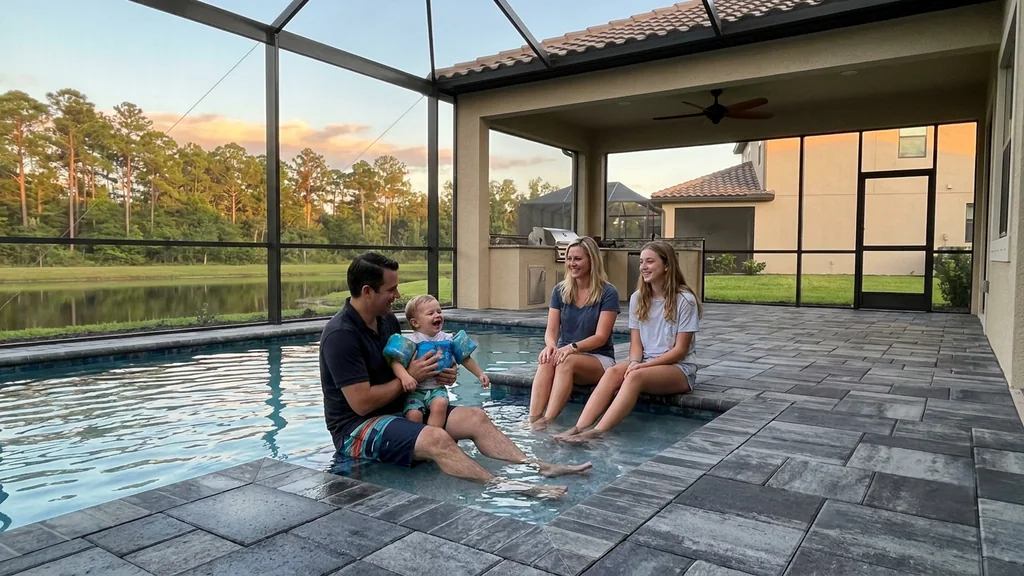
Why San Jose chooses Paver Sealing St Johns
Most San Jose homes went up after 1947, when the old 1920s plan was re-platted for postwar houses, and those driveways are now decades old. People here want a contractor who checks the base and the edges before talking about shine, so request your free quote and ask for that.
No charge to look
Someone comes to your San Jose home, measures the pavers and prices the job in person. You owe nothing for the visit.
Know the going rate
Companies across Northeast Florida tend to list $1.50 to $3.00 a square foot for cleaning, sanding and sealing together.
Matte or wet look
A matte coat keeps a soft, natural color on a ranch-style drive. Wet look is richer, but it shows tire scuffs sooner.
Nothing starts without you
Your San Jose estimate carries no obligation. You set the schedule and pick the finish, or decide to wait.
Get Your Free Estimate in San Jose
Tell us about your pavers in San Jose.
Free, no obligations
What paver problems show up most in San Jose?
Low spots from a weak base
Many San Jose driveways sit in front of homes built in the postwar boom, and the pavers were added at different times by different installers. A paver maker names a weak or poorly compacted base as a leading cause of sinking and shifting. Sealer does not lift a dip. A sealing company warns that a coat locks in whatever is there, so low spots get reset first. A low spot that holds a puddle after rain is the easiest one to find.
Gaps opening along the edges
Pavers need something solid holding the outside row in place. Without edge restraints, the same paver maker says, the field can drift apart and leave gaps. Jacksonville's heavy summer storms then wash sand out of those wider joints, and soil settles in where the sand was. In San Jose, weeds along the outer row of a walk are often the first clue. Resetting that outer row before sealing keeps the rest of the walk from spreading.
Color fading in open sun
Not every San Jose yard sits under the oaks. Ranch homes on wider lots often have driveways in full sun for most of the day. A Jacksonville paver company says local sun fades bare concrete pavers within 3 to 5 years. Sealer works a bit like sunscreen for the color, which is why sunny drives often look washed out before shady ones. A matte coat can bring back some depth without adding shine.
Black mildew where sprinklers hit
The same company says shaded pavers that sprinklers hit grow black mildew fast. A paver trade group adds that moss and algae rarely take hold on concrete pavers unless the area is heavily shaded. In San Jose, the side yard between houses is a common place for both conditions to meet. Mildew has to be cleaned off fully, since sealer would hold it in place. Trimming back the spray pattern can help between coats.
Orange streaks from iron
Most Florida well water carries a lot of iron, according to University of Florida extension. When it feeds a sprinkler system, rust colored streaks build up wherever the spray lands. Some deep rust stains never come out fully, a Jacksonville sealing company admits, and it tells owners that before starting. Ask how much your San Jose stains are likely to lighten. Knowing that ahead of time keeps the finished job from being a surprise.
Do postwar San Jose homes need different paver care than the estates?
Often they do, because the two groups of homes were built for different lives. After 1947, the firm of Stockton, Whatley, Davin and Company re-platted most of San Jose and filled it with postwar subdivisions. Ranch and midcentury modern homes now sit beside a few Mediterranean Revival survivors from the 1920s. Older driveways in those subdivisions are where a contractor checks the base first, so request your free quote and describe yours.
On the river, Gate Petroleum turned the 58-acre Epping Forest estate into a private community of homes and condominiums after 1984. The Villages of San Jose rose in the 1980s on the old Beauclerc Country Club grounds. Under Florida law, an association can review changes to how a home looks if its rules say so. Call (904) 552-3813 before booking if you think your community has an approval step.
Housing types vary more than many people expect. Only about 55 percent of the housing units in ZIP 32217 are single-family, so plenty of San Jose residents live in multi-family buildings. Homes themselves run from small wood-frame starters to large waterfront houses. From a starter home to a riverfront property, request your free quote and the contractor will size the visit to your lot.
What does paver sealing cost in San Jose?
Published rates around Northeast Florida for a full clean, sand and seal tend to fall between $1.50 and $3.00 per square foot. A San Jose job moves up that range when low spots need resetting, edges need work or mildew runs deep. A sound driveway with tight joints tends to cost less per foot. Your exact number comes from a free visit, so request your free quote when you are ready.
Size cuts both ways. A small walk can cost more per foot than a large drive because setup and prep take about the same time, one Jacksonville guide notes. Tight side yards, locked gates and a mix of surfaces also add time. To hear how your layout affects the price, call (904) 552-3813.
| Paved area | Typical example | Clean, sand and seal |
|---|---|---|
| 300 sq ft | Small patio or walkway | $450 to $900 |
| 600 sq ft | Two car driveway | $900 to $1,800 |
| 1,000 sq ft | Large driveway or pool deck | $1,500 to $3,000 |
| 1,500 sq ft | Driveway plus pool deck | $2,250 to $4,500 |
Math based on the $1.50 to $3.00 per square foot that Northeast Florida paver companies published as of November 2026. Your contractor sets the actual price after seeing the surface. Repairs, leveling and stripping failed sealer are usually extra.
How does a paver sealing job work in San Jose?
Check the base, edges and slope
On an older San Jose driveway, the first job is finding what moved. The contractor looks for dips, rocking pavers, gaps along the edge and spots where water pools. Each of those gets fixed before any coat goes on, since sealing would lock them in. You should hear which problems are cosmetic and which need repair. A level or a long straight board makes small dips easy to see.
Clean off mildew, rust and grime
Washing comes next, with extra time in sprinkler zones and shaded side yards. Rust streaks get treated, and stubborn stains are pointed out honestly if they will not fully lift. The pressure is matched to the paver so the face is not scarred. Plant beds and screens near the work get covered or rinsed. Oil spots under where cars park get pre-treated before the main wash.
Fill the joints with new sand
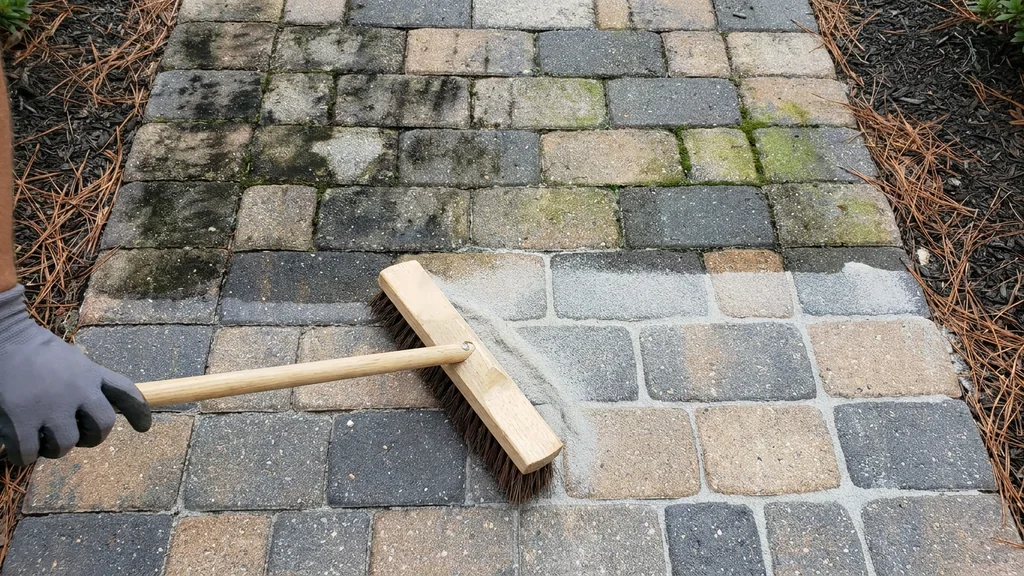
Cleaning strips sand from the joints, so new sand goes back in before sealing. It is swept across the surface until every joint is full. Along edges where pavers had drifted, this step helps hold them tight again. Leftover sand is cleared away so it does not end up under the sealer. Joints that stay full are harder for weeds to use.
Wait out the rain and the damp
Sealer has to go onto dry pavers. From May to September, Jacksonville storms can soak a driveway in minutes, and deep sandy soil around here can hold a high water table for days after heavy rain. A Jacksonville paver company says damp pavers are behind most sealer that turns white. Good timing protects the finish. Shaded side yards can lag behind the front drive by hours.
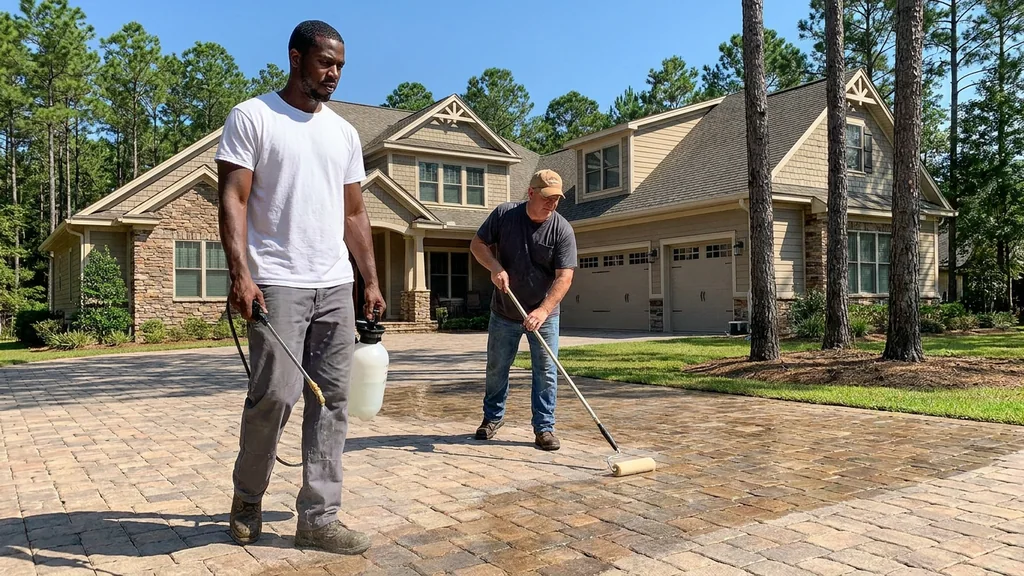
Apply the coat and stay off
The sealer goes on in the finish you picked, usually sprayed and then rolled to spread it evenly. Walking on it is typically fine within a few hours. Cars need longer, often about a day, depending on the product and weather. Ask the contractor for a time that fits your San Jose driveway. Many owners plan to park on the street or in the garage overnight.
Complete paver services in San Jose
Every San Jose job runs in the same order: fix, clean, sand and seal. Repairs come first so the coat does not freeze a dip in place. Cleaning removes mildew and stains, new sand refills the joints, and the sealer goes on last over a dry surface. To ask how the order plays out on your driveway, request your free quote.
Each surface wears in its own way here. Sunny ranch-house drives fade, shaded side yards grow mildew, and pool decks stay wet longer than anything else. Walks along the edge of a lot are where gaps and weeds show up first. Tell the contractor about each of these spots when you call (904) 552-3813.
Choosing a sealer starts with the old coat, if there is one. A water-based product will not bond over a solvent-based one, so the contractor has to know what is there. Then you pick matte for a natural look or wet look for deeper color that shows scuffs sooner. Ask which one suits a San Jose ranch or Spanish Revival front when you request your free quote.
Rain sets the calendar in San Jose. The wet season runs from May to September, and short storms can roll in on a clear afternoon. A good contractor checks the forecast and waits for dry pavers rather than racing a storm. For a date that works around your schedule, call (904) 552-3813.
Questions to ask before you hire
- What is your payment schedule, and is a deposit required?
- About how long before my pavers need sealing again?
- Does your quote cover the cleaning, new sand and any fixes?
- Can you show me what a wet look and a matte finish look like?
- How do I get hold of you if something looks off after the job?
- If the sealer turns milky or white, how do you make it right?
- How do you handle a rainy forecast on my scheduled day?
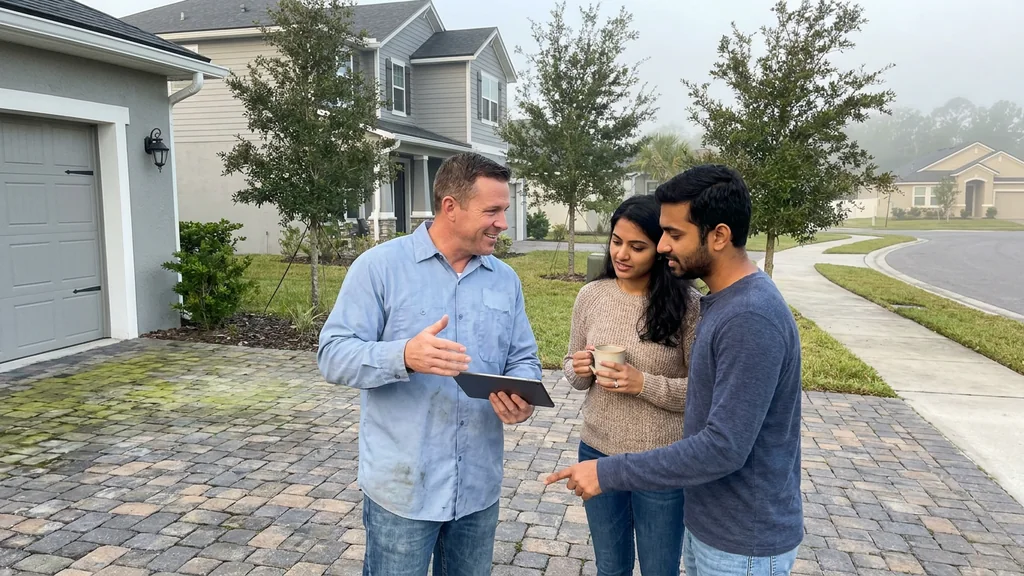
Why local matters in San Jose
A contractor who works San Jose knows that many driveways here are decades old and were laid by different crews. That means looking at the base and edges first, not only the color. A quote that skips that step can miss the real cost. Call (904) 552-3813 and ask what a base check would look like on your lot.
Local contractors also know the communities. Epping Forest, the Villages of San Jose and other planned neighborhoods may have rules about exterior changes. A contractor familiar with the area will ask about them before setting a date. If you live in one of these communities, request your free quote and mention its name.
Weather and water round it out. Summer rain in Jacksonville comes hard and fast, and iron-rich well water can stain pavers in a single season. Someone who has worked here knows to plan for drying time and to warn you about stains that may not fully fade. You can request your free quote with no obligation to hire.
What was San Jose before it became a neighborhood?
It began as a Spanish land grant of 1,135 acres to Francis Xavier Sanchez in the late 1700s, later called San Jose Plantation. In 1925 a developer bought 1,000 acres of it for a planned resort town that stalled after the land boom collapsed. Postwar builders finished the job with the ranch homes you see today. If your home is one of them, call (904) 552-3813.
Landmarks from each era are still standing. The Epping Forest mansion, finished in 1927, is now the Epping Forest Yacht Club, and San Jose Country Club grew in the 1960s and 1970s. Parks such as Nathan Krestul Park, Verona Park and Baker Skinner Park dot the neighborhood. Near any of them, request your free quote and give your street name.
Frequently Asked Questions
What does it cost to have pavers sealed in San Jose?
Most San Jose jobs fall within the $1.50 to $3.00 per square foot that Northeast Florida companies publish for cleaning, sanding and sealing. Base repairs, edge work and heavy mildew push the price up. Small areas can cost more per foot because setup time stays the same. Ask for the measured square footage in writing so bids can be compared.
What laying mistakes should San Jose homeowners avoid before sealing pavers?
The big ones are a weak base, missing edge restraints and the wrong slope. A paver maker says these cause sinking, gaps and drainage trouble. None of them can be fixed with sealer, so a San Jose contractor should repair them before the coat goes on. Ask the contractor to show you any of these problems during the visit.
Is pressure washing safe for a paver patio in San Jose?
Yes, when the pressure suits the paver and the joints are refilled afterward. Washing pulls sand from the joints, so new sand always goes back before sealing. Too much pressure can scar the paver face, which is one reason many San Jose owners leave this step to the contractor. Ask what pressure will be used near older pavers or soft edges.
Should San Jose patio pavers be sealed at all?
Sealing is optional, but it helps concrete pavers here. A Jacksonville paver company says local sun fades bare pavers within 3 to 5 years and mildew grows fast where sprinklers and shade meet. A coat slows both and helps hold the joint sand in place. Dense natural stone like travertine is the main exception that company names.
How often do San Jose pavers need a fresh coat?
A fresh coat every two to five years is the span companies tend to quote. Sunny driveways and pool decks usually need one sooner than shaded walks. Water that soaks in and darkens the pavers, rather than beading, is a sign the old coat is spent. A quick look once a year helps you catch it early.
Can a new sealer go over the coat already on my pavers?
Sometimes, but not always. A water-based sealer cannot go over a solvent-based one, so the contractor has to identify the old coat first. On a San Jose home that has changed owners, that may take a closer look. Keep any product names or receipts you find, since they settle the question fast.
Does my San Jose HOA have to approve paver sealing?
It might. Florida law lets an association review changes to the appearance of a home to the extent its declaration or published rules allow. Check your community's guidelines, especially in planned neighborhoods such as Epping Forest or the Villages of San Jose. If approval is needed, it is best to have it in hand before booking a date.
Why do some sealed pavers turn white or cloudy?
Most cloudy sealer comes from coating damp pavers or putting on too much, a Jacksonville paver company says. That is why drying time matters so much during summer storms. Ask the contractor how they judge when your pavers are dry enough. A patient contractor would rather move the date than seal a damp surface.
Ready for a Free Estimate in San Jose?
Call (904) 552-3813 and tell us about your pavers.
Free, no obligations